Kaski, Nepal
Nepal
14 Days
Moderate
Trekking/ Hiking
3210 M / 10531.5 Feet
Mar to May, Sep to Nov
Included
Kathmandu/ Kathmandu
Hotels and Teahouses
In Pokhara, the mountains begin to speak to you. This lakefront city is the entry point to the Annapurna region — and from here, the real fun starts. The Annapurna Base Camp Trek is a 13-day adventure that will transport you from the balmy lower-elevation climes to an alpine oasis beneath some of the fiercest mountains on Earth.
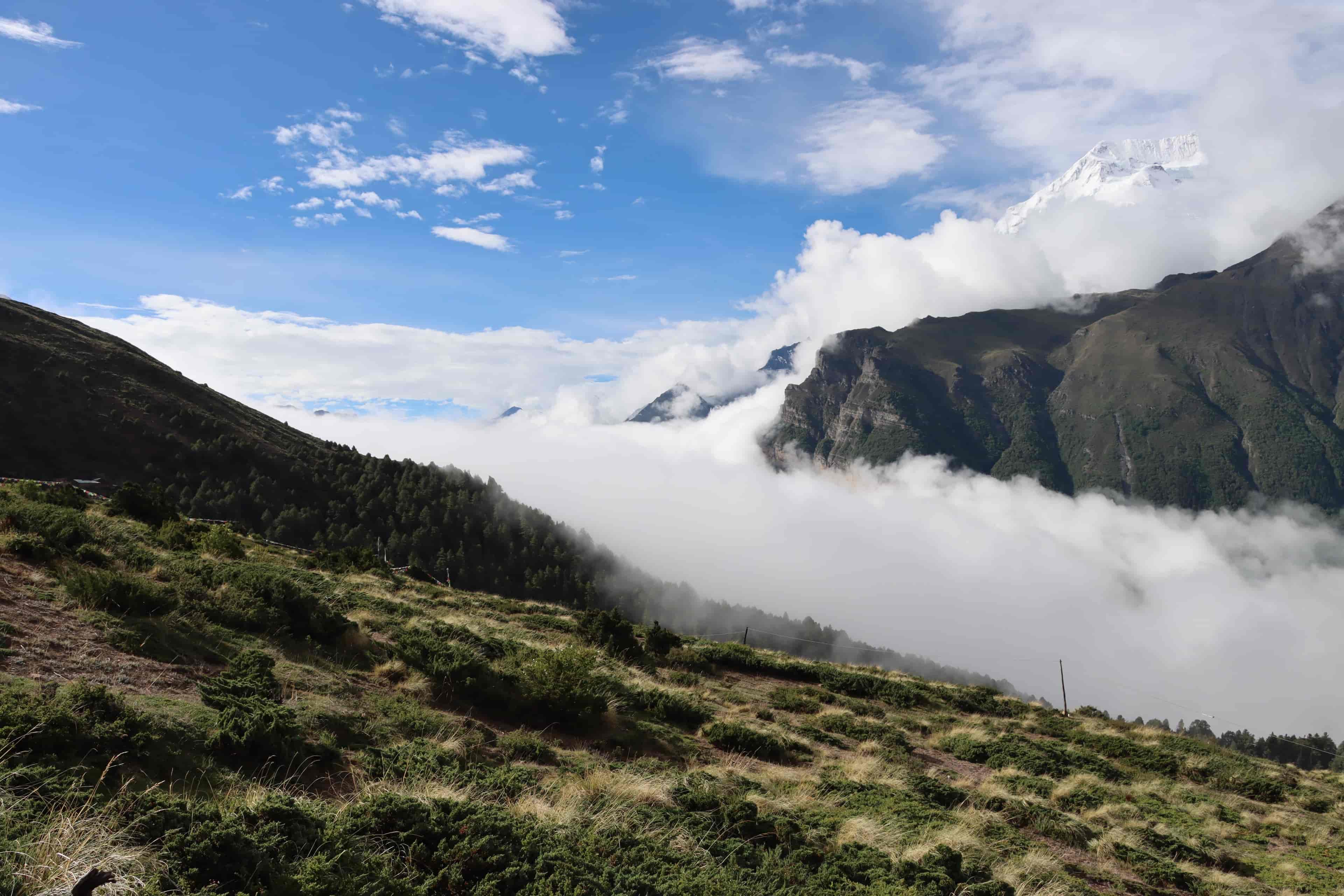
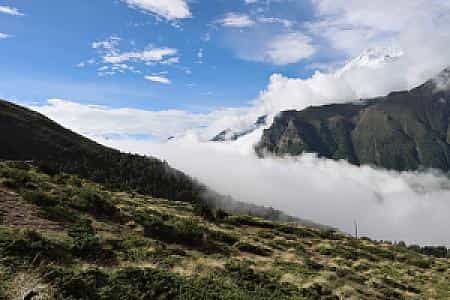
You will tramp through land whose character changes entirely as you climb. There’s heavy rhododendron until you reach the open ridges. From below come terraced rice paddies, from above alpine meadows. The air is thinner, the views are bigger, and by the time you arrive at Annapurna Base Camp (4,130 meters), you’re in what feels like a colossal amphitheater cut out of the Himalayas.
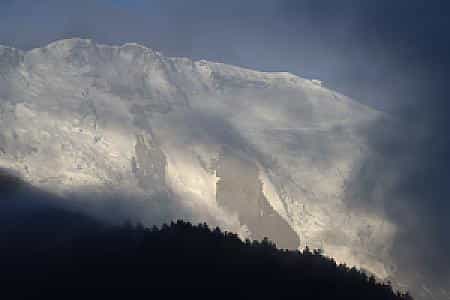
The Annapurna region is unlike the crowded trekking routes. You'll meet relatively small Gurung and Magar communities in the villages along the trail, their customs and expansive hospitality permeating every meal at teahouses. After days of climbing, you’ll soak in natural hot springs at Jhinu Danda among the rhododendron forests. You’ll see the sun rise from Poon Hill over a snow-capped mountain panorama. All while back at base camp, you’ll be surrounded by Annapurna I (10th 10th-highest peak in the world at 8,091 meters), Machapuchare (the sacred Fishtail), Dhaulagiri, and other peaks that feel close enough to touch.
It’s a tough, but manageable hike. Moderate to challenging trekking from five to eight hours a day up and down with tough gradients. Your body will work hard. Your lungs will adapt. And when you reach base camp, you’ll know why people come back to the mountains, again and again.
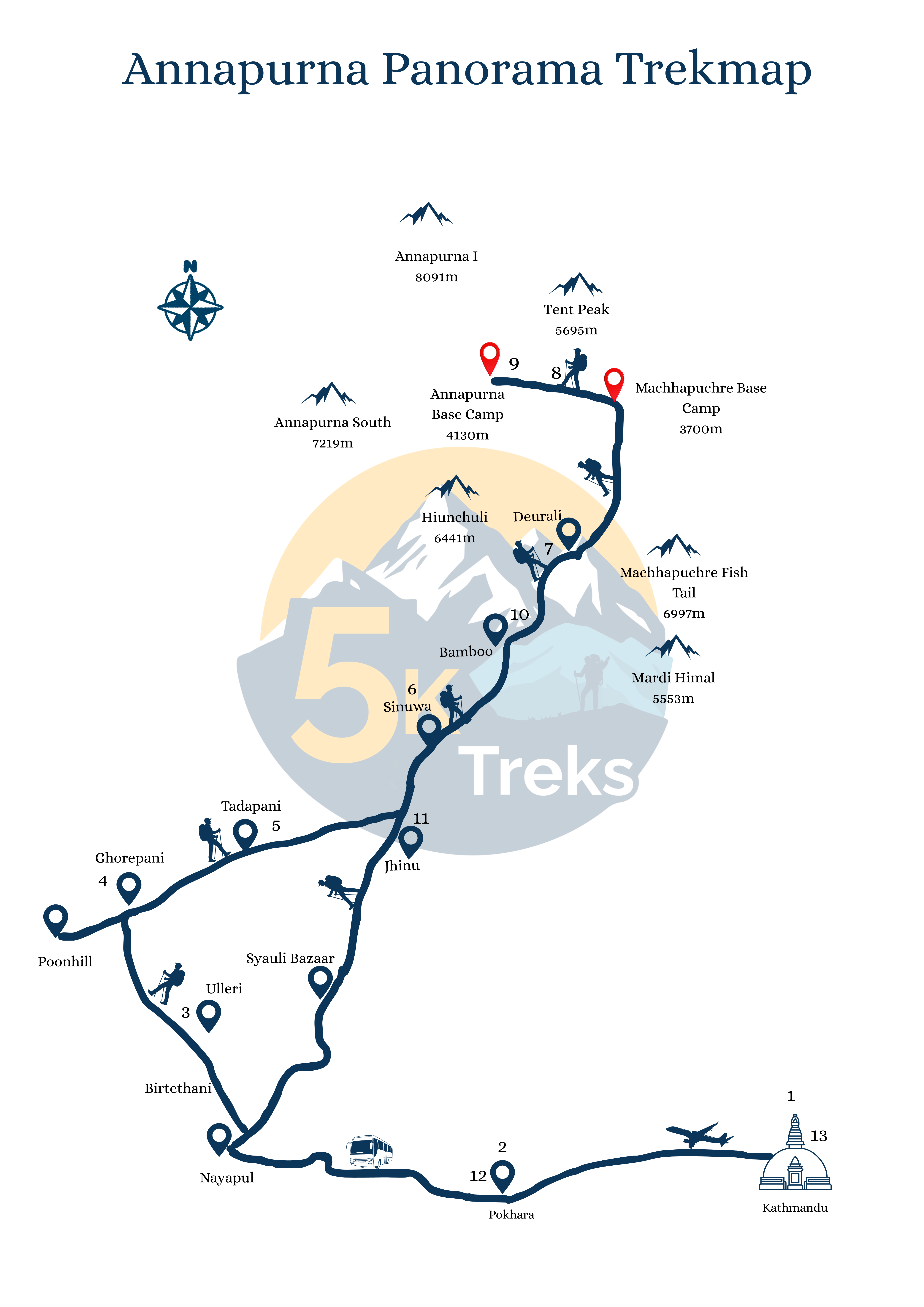
Arrive at Tribhuvan International Airport, Kathmandu (1,400 m/4,593 ft)
Kathmandu to Pokhara (Drive)
Pokhara to Birethanti to Ulleri
Trek from Ulleri Village to Ghorepani (2780 m/9,429 ft) - 5/6 Hrs
Early morning visit Poon Hill (3210 m/10,532 ft) and Trek to Tadapani (2610 m / 8,563 ft) - 6/7 hrs
Tadapani to Sinuwa
Sinuwa to Deurali
Deurali to Annapurna Base Camp
Hike Annapurna Base Camp
Annapurna Base Camp to Bamboo
Bamboo to Jhinu Danda
Jhinu to Syauli Bazaar to Pokhara
Pokhara to Kathmandu
Fly to your destination
You’re ascending from 900 meters in Pokhara to a height of 4,130 meters at base camp. That’s a lot of elevation gain in 13 days. Acute Mountain Sickness can affect those who are fit and unfit. Symptoms include headache, nausea and dizziness, and lack of sleep.
The itinerary includes gradual ascent and rest days for acclimatization. Days 4 and 5, trek to Pooh Hill for acclimatization. Base Camp on Day 9 is your only rest at altitude. But listen to your body. If your symptoms get worse, let your guide know right away. It’s not an issue, and it’s always the correct answer when altitude is legitimately bothering you.
Hydration is your biggest ally. Drink 4 to 5 liters daily. Your urine should be nearly clear. The vast majority of early headaches are due to dehydration, not altitude.
This hiking journey is active, and approximately five to eight hours a day can be spent on the trail with ascents and descents. If you can’t do that already, start training now to hike five hours with 500 to 800 meters of elevation gain and loss. You need two solid months of regular workouts, minimum. Add hill hiking with a weighted pack, stair-climbing, or incline treadmill to the mix.
Build until you can comfortably hike with a three to four-hour uphill with elevation gain without getting destroyed. If you can do that, this hike is possible.
Spring (March to May) is the time for rhododendron blooms and typically clear skies, which means it is popular but crowded. Days are warm. Nights are cold. Something that goes up and down only 20 degrees Celsius between day and night is about average.
Autumn (September to November): The weather remains pleasant and clear during the autumn. Days are pleasantly warm. Higher up, nights are cool. And this is also a great favorite for the obvious reason.
Skip the monsoon (June to August), rain is a flood, landslides are a thing, and leeches don’t give up. Snow can land at higher levels in winter (December–February), but the lower areas don't completely close down.
Weather changes fast. Sun turns into the foggiest cloud you've known. Always carry rain protection.
The teahouses are basic. Rooms are basic with slim beds, flimsy blankets, and chilly nights. Bathrooms are basic. Water is cold and provided on request for a small charge. There’s no Wi Fi in most spots. Electricity is limited.
Food is authentic and simple. You can count on dal bhat (rice and lentils) every day. There, too: momos, thukpa, noodle soup, eggs, and sometimes yak meat. Western options are minimal. Embrace the local food. Like most places, the food tastes better at altitude, and it’s less about what’s on that menu than the hospitality behind each meal.
The teahouse proprietors are warm-hearted and cordial. They will give you extra hot water bottles for your bed at night, boil a pot of tea when you wake up in the morning, and offer meals made from slim pickings but earnest effort.
You need an Annapurna Conservation Area permit and a TIMS card (Trekkers’ Information Management System). These are checked at teahouses. Permits are usually included if you’re trekking with an agency. Carry them always.
Nepal is relatively safe for solo female trekkers. Thousands of women hike these trails each year without a problem. Your guide will take care of you. The teahouse communities are welcoming. As always, trust your instincts, but don’t let fear block this passage.
+
+
+
+
+
+
$1100.00
© 2026 5k Treks Pvt. Ltd. All rights reserved.