

Taplejung
Nepal
22 Days
Challenging
Trekking/ Hiking
5143m
Mar to May, Sep to Nov
Included
Kathmandu/ Kathmandu
Hotels and Teahouses
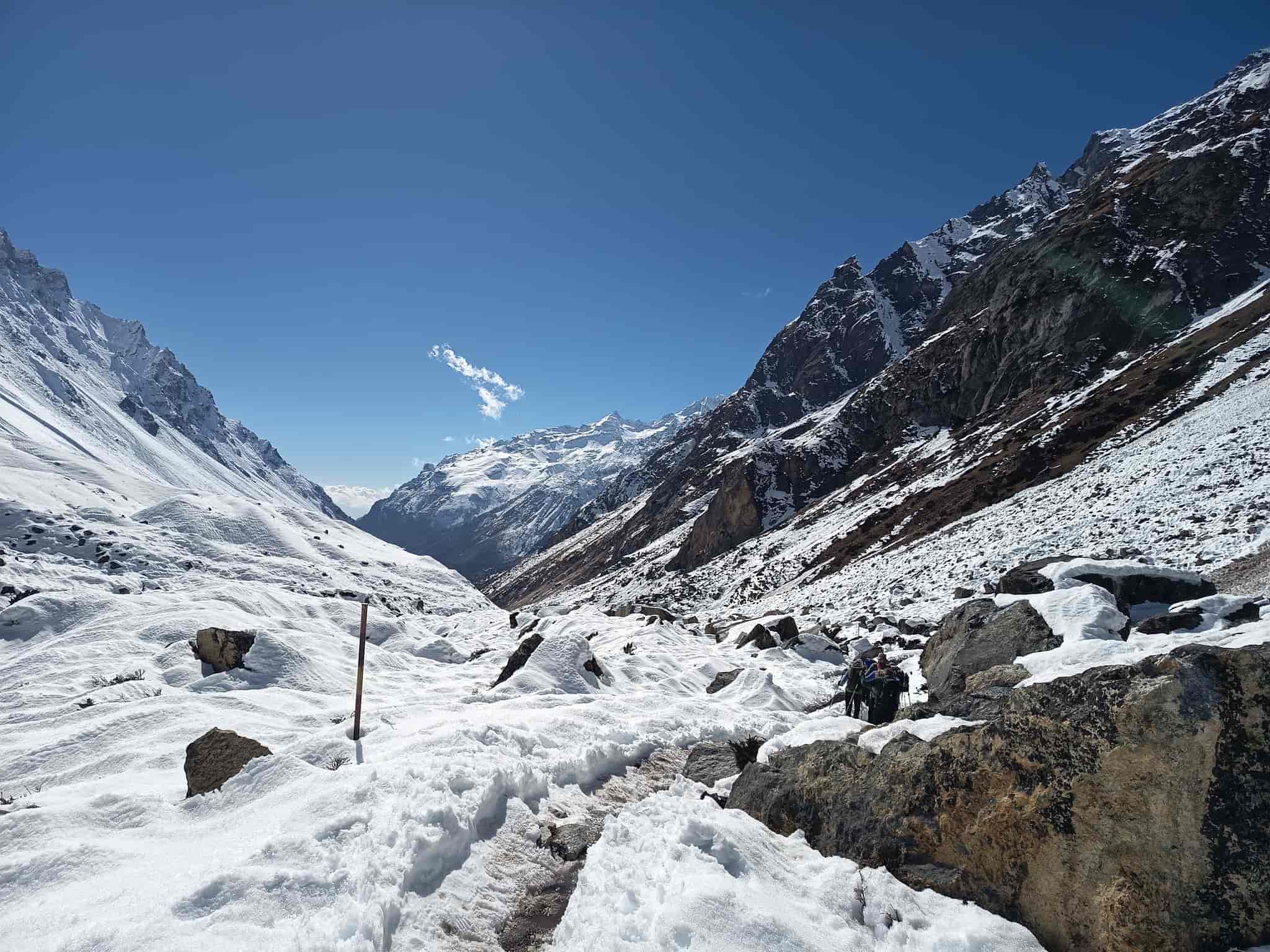
The Kanchenjunga Base Camp Trek is one of Nepal's most challenging high-altitude treks, with trails that are definitely not for the faint-hearted. It requires supreme fitness and mountaineering grit. During the course of the expedition, there are challenging alpine routes every day, with hiking 5-8 hours per day, averaging only 91 meters of gain to the extreme altitude of 5,143 meters over a 5 km vertical distance, including some of the toughest landscapes in the Himalayas.
This challenging trek is unique among the others due to the remarkable double base camp. The trek to both the North Base Camp and the South Base Camp of Kanchenjunga is one of the very few treks in the world that offers the opportunity to explore its northern and southern faces. The jaw-dropping transitions from dense lower jungles to life-desert alpine zones mean a journey through several different climate gambits that each throw their own punchy obstacles and visual treats.
Because it is so remote, the Kanchenjunga Base Camp Trek maintains unspoiled conditions, as only a handful of trekkers are granted access annually, thereby minimizing the impact of mass tourism. What makes this trip even more special is its deep cultural connection to the Sherpa Buddhist villages, and a spiritual aura from monasteries and prayer wheels spills throughout each phase of our trek.
The trail climbs through high-altitude passes rising to 4,785 meters, providing clear views of the Himalayas, with several 8,000-meter peaks visible from a single vantage point. Permits have been an essential aspect of working with the refuges (a direct result of their restricted area status) — they send a message through requirements: if you need to get out of the office, then be sure it is for a good purpose.
The fact is that, while it's going to be awfully tough on the body and mind, even an ordinary trekker in good condition can tackle the walk. Veteran trekkers frequently become highly organized, with acclimatization tactics and planned days of rest at critical elevations—Ghunsa, for example (3,417 meters), is invaluable for coping with such a massive altitude gain and for ensuring safe passage through harsh alpine conditions.
Arrival in Kathmandu (1,400m)
Spare Day for Flight Delays and Local Exploration
Fly Kathmandu to Bhadrapur, Drive to Fiddim or Taplejung
Drive to Sukethum from Taplejung (4-5 hours)
Trek to Amjilosa from Sukethum (6-7 hours)
Trek to Gyabla from Amjilosa (4-5 hours)
Trek to Ghunsa from Gyabla (4-5 hours)
Acclimatization Day in Ghunsa with Optional Hikes
Trek to Khambachen from Ghunsa (4-5 hours)
Trek to Lhonak from Khambachen (4-6 hours)
Trek to Pangpema (North Base Camp) and Return to Lhonak (6-8 hours)
Trek to Khambachen, Then Continue to Ghunsa (6-8 hours)
Trek to Selele Camp from Ghunsa (3-5 hours)
Trek to Tseram via Three High Passes (3-5 hours)
Trek to Ramche from Tseram (3-4 hours)
Trek to Oktang (South Base Camp) and Return to Tseram (5-7 hours)
Trek to Tortong from Tseram (4-5 hours)
Trek to Yasang from Tortong (5-6 hours)
Trek to Hellok, Then Drive to Taplejung (2-3 hours trekking, 4-5 hours driving)
Spare Day for Flight Delays and Sightseeing
Drive to Bhadrapur, Then Fly to Kathmandu (8 hours drive, 45 minutes flight)
Transfer to the International Airport for Final Departure
The Kanchenjunga Base Camp Trek focuses on actual experiences of living in the mountains. In Kathmandu, you will stay in 3-star hotel rooms and have breakfast, ensuring a comfortable stay before beginning the strenuous trek. The trek is characterized by simple guesthouses with twin-sharing or dormitory rooms. These are small shelters where you can rest in warm, dry conditions with minimal facilities, yet with an extreme cultural authenticity.
Bathrooms are usually equipped with squat toilets that have simple washing facilities. There is electricity, but few charging sockets are available in sleeping rooms, so the common dining areas are the main charging places, where charging costs USD 2-5 per item. Four-season sleeping bags with a temperature rating of -15 °C/5°F can be rented for USD 35 and are essential when high-altitude temperatures drop to extreme lows. Hot showers cost an additional USD 2-5 and are becoming increasingly scarce above Ghunsa, where bucket showers are used instead. Sleeping bags and headtorches are also required to complete the expedition.
Guesthouses cook fresh food with local ingredients, providing nutritious fare perfectly adapted to mountain conditions. The conventional dal bhat (rice and lentil soup with vegetables) serves as a daily source of energy for hiking. The menu is varied, with Tibetan bread, noodle soup (thukpa), momos, pasta, and fried rice to suit diverse palates. Vegetarians have many options, such as egg curries and bright vegetable dishes.
Do not use tap water or stream water; use purification tablets or UV water purifiers given by your trek operator. Buy boiled water at the guesthouses; it ranges from USD 2-5 per litre, with prices rising at higher altitudes where it becomes harder to treat water. Filtration water bottles, such as LifeStraw, are highly encouraged for their reusability and significant cost savings during your 22-day expedition.
Bring USD 15-20 per day (NPR 2,000-3,000) as personal spending money on hot showers, device charging, snacks, drinks, Wi-Fi, and guide/porter tips. There are no ATMs above Taplejung in Kanchenjunga, so one has to withdraw cash in Kathmandu and trek. To do the entire 22-day trek, you must carry USD 300-400 total (NPR 40,000-50,000). All transactions are in Nepali Rupees, and small denominations are highly advisable in remote villages where large bills can be challenging to change.
Bigger bills (USD 50-100) are effective in Kathmandu, but must be issued before 2009 and in excellent condition, as banks do not accept worn or torn bills according to strict authentication standards.
Take off shoes and hats when entering monasteries, talk in low tones, and never take photographs without seeking permission in prayer halls. Turn the pass mani walls, chortens, and prayer wheels on the left-hand side clockwise as a sign of respect to Buddhist traditions. One should not point with a single finger; one's whole hand should be used when making directions. Do not walk over sacred books, mani stones, or ritual objects; walk around them with reverence.
Wear the local customary and religious attire around monasteries and communities, showing respect to the local people and their faith. Greet them with Namaste or Tashi Delek, showing genuine appreciation for the culture. In sacred places, photography must be permitted only with the express permission of the monks or caretakers.
The journey starts at 91m and culminates at the highest point of 5,143 m, offering significant altitude gain and demanding extraordinary physical fitness and mental fortitude. Symptoms such as severe headache, nausea, fatigue, sleep disturbance, and dizziness are usually experienced above 3,500m. Guides keep an eye on your health by continually tracking your oxygen levels with oximeters, adjusting the pace as needed based on your acclimatization rate.
Pre-acclimatization days at Ghunsa (3,417m) are simply imperative to pass without encountering any disastrous high-altitude effects. All participants must have mandatory travel insurance that covers high-altitude trekking and emergency evacuation. Before they leave, participants are required to undergo thorough medical examinations and to inform guides of any pre-existing conditions that may impair their performance at high altitudes.
The services of porters are still not obligatory but highly encouraged in this very demanding journey. Porters can carry up to 25kg, and 12.5kg/client is encouraged as optimal. A porter typically caters to two trekkers, but it is possible to share a porter with a friend, and this will reduce the expenses of a personal porter by half. With porter assistance, you will carry a small day pack (3-4kg) with daily necessities to stay comfortable and in case of emergencies.
The recruitment of porters makes local mountain communities economically viable, reduces the physical toll of the challenging terrain, and enhances the entire trekking experience. Package pricing involves Porter wages, meals, accommodation, gear, insurance, and medications.
The Kanchenjunga Base Camp Trek also requires a Kanchenjunga Conservation Area Permit (KCAP) and a Restricted Area Permit (RAP), which indicate the area's conservation status. Some permits require a minimum of 2 trekkers per group with an official government-licensed guide; solo trekking is not allowed in this limited wilderness region. Registered trekking companies hold permits, ensuring compliance with all conservation rules and local government standards.
Friends or family groups can visit some of the most remote places in the world through private treks. In contrast, group treks and other adventures can offer the same experience, albeit at reduced costs for individual resources and guide services.
The best times to go trekking are in autumn (mid-September to November) and spring (March to early June), when the weather is clear, with a reasonable horizon and no sudden changes. During spring, the forests are covered with bright rhododendron flowers, and the natural spectacles are magnificent. Autumn is the best season for the Kanchenjunga Base Camp Trek, as the weather is mild and precipitation is lower.
The winter (December-February) is freezing, and it snows heavily at higher altitudes. Yet, it can be overcome with an extraordinary level of preparation by trekkers who wish to have privacy. The monsoon season (July-August) poses significant challenges, as it rains and visibility is very low. It is usually not recommended to undertake this trek, as it is a hazardous activity and the trail is challenging.
The Kanchenjunga Base Camp Trek is a one-of-a-kind extreme mountain high challenge, with two base camp summits and a Himalayan wilderness discovery. This is an intense package that takes 22 days. However, with outstanding physical and mental preparation, it is open to all well-prepared and focused adventurers who are willing to undertake transformative mountain experiences beyond the reach of most tourists.
5ktreks' dedication to safety, sustainability, environmental protection, and cultural exchange makes it a pioneer of responsible mountain tourism. The company's involvement in positive-impact tourism and its partnership with local communities demonstrate its commitment to the ethical organization of expeditions.
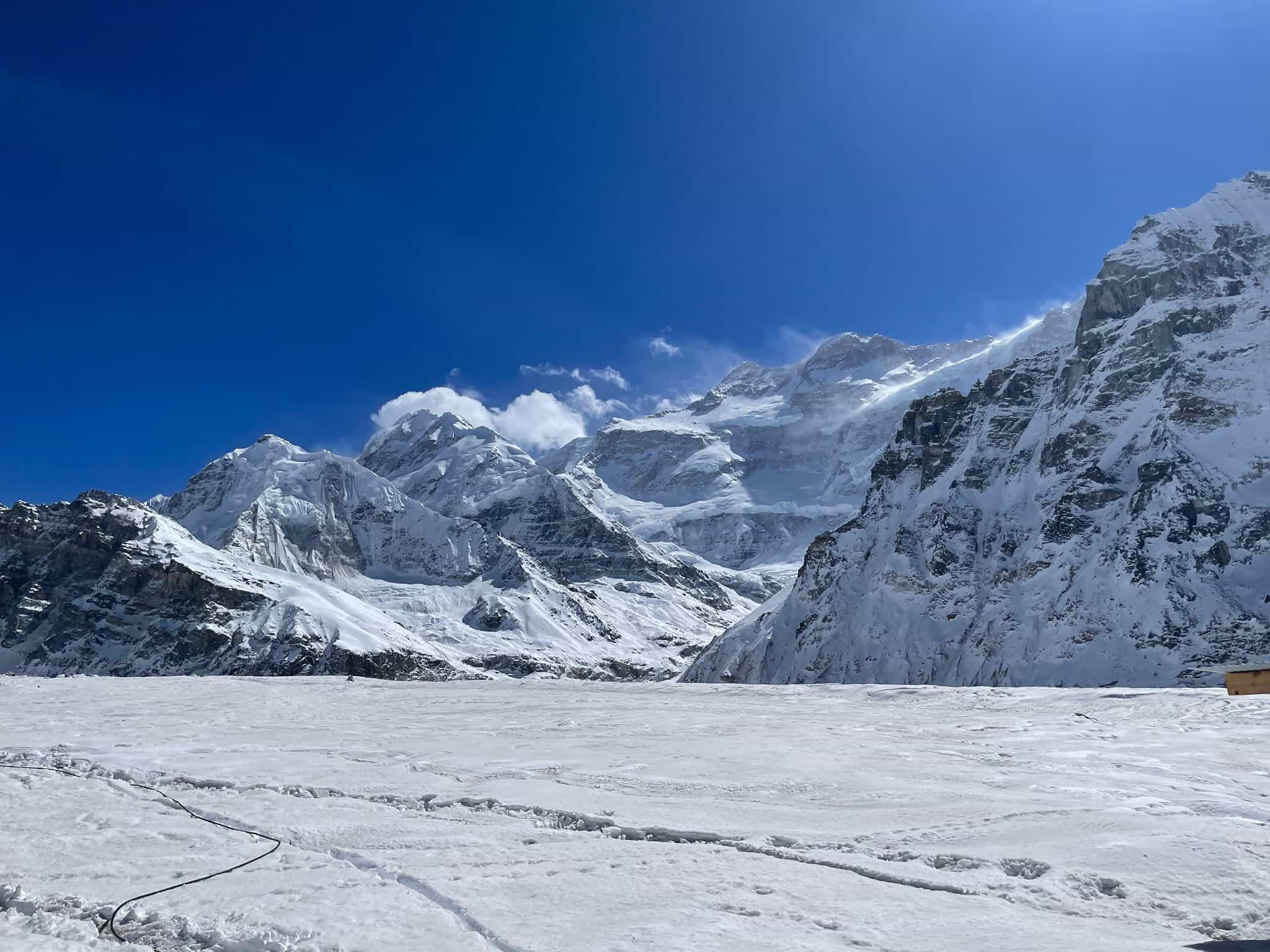
When you go and experience the Kanchenjunga Base Camp Trek, you will experience snow-white mountain peaks of 8,000 meters, clean glacial terrain, endangered high altitude animals, and old Sherpa Buddhism. A journey to the North and South Base Camps offers a complete Kanchenjunga experience unlike any other Himalayan trek. It generates moments of profound personal change that will be remembered long after the mountains are left behind.
Get in touch with Contact 5ktreks today to get started on the adventure to Nepal's best-kept secret. Talk about personalization, team rates, custom training suggestions, and logistics in this remarkable Kanchenjunga Base Camp Trek trip. You will be transformed among the highest peaks of the world.
+
+
+
+
+
+
+
.png)
$2350.00
© 2026 5k Treks Pvt. Ltd. All rights reserved.