
_11zon-thumb.jpg&w=3840&q=50)
Annapurna Region
Nepal
11 Days
Challenging
Trekking/ Hiking
3640m
Mar to May, Sep to Nov
Included
Kathmandu/ Kathmandu
Hotels and Teahouses
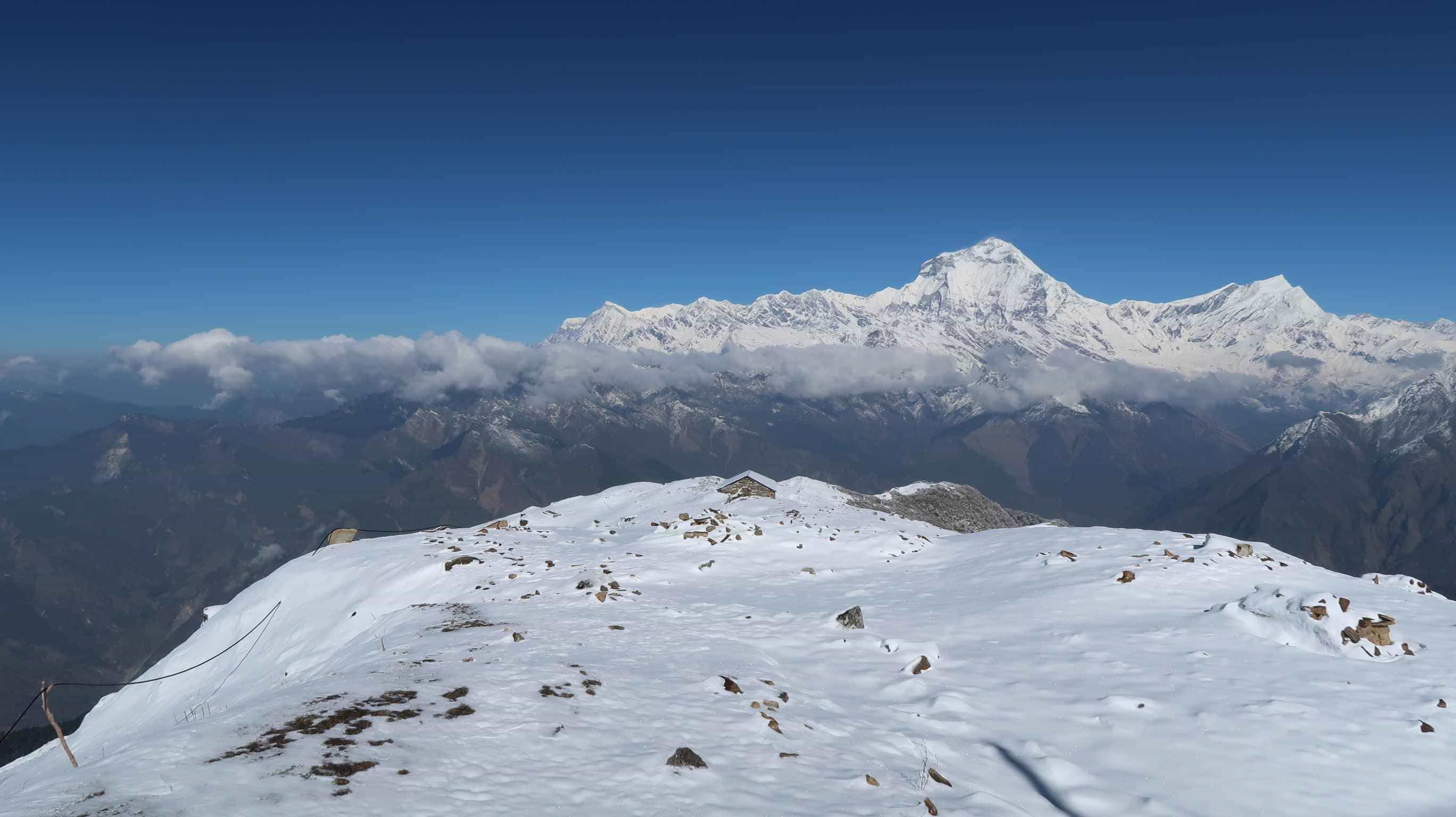
Khopra Danda is a less popular trek. This 11-day trip offers an alternative to spectacular views of the Annapurna region, with even more substantial exposure to what popular treks provide, but from a different perspective. You have panoramic views of the mountains and fewer crowds. Annapurna, Dhaulagiri, and Nilgiri fill the entire window at eye level, standing on Khopra Ridge at 3,640 meters.
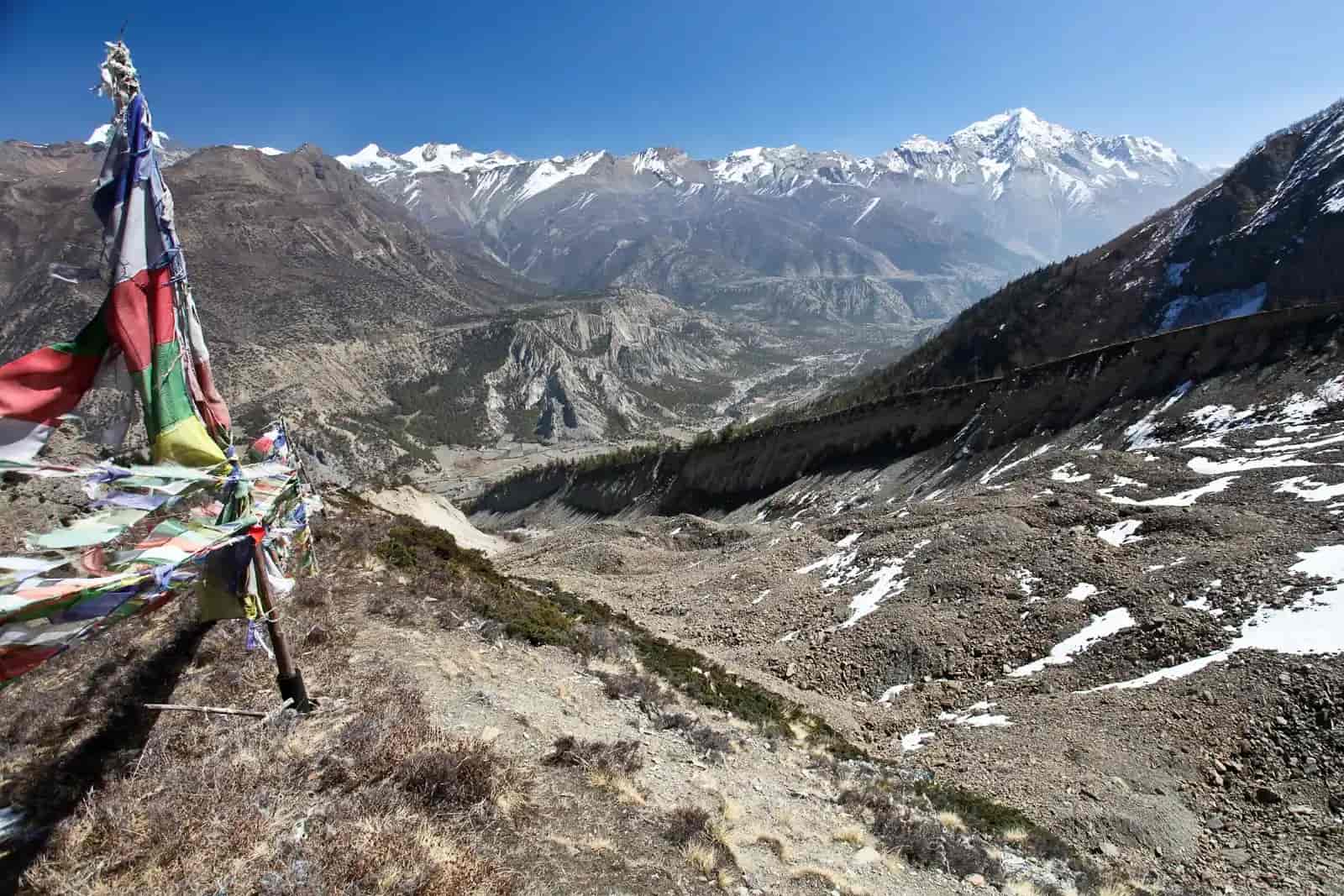
This hike is also known as the Khopra Ridge Trek or the Khayer Lake Trek. By contrast, it is new enough that the trails aren't thoroughly beaten and are truly exotic. The trek passes through the thick forests of rhododendron, oak, bamboo, and pines. You'll spot Langur monkeys swinging through the trees. You'll cross high altitude meadows. At 4,660 meters, you will arrive at a holy lake that feels very much out there.
What makes Khopra Danda different is its difficulty level. This hike is on the line between easy and difficult. It isn't easy, but it is manageable if you are moderately fit. Fairly strenuous hiking on good trails, with moderate to significant elevation gain. This is what makes it ideal for those hiking with families that have young kids/older members.
If you want Annapurna region views without the crowds and a trek that balances challenge with manageability, Khopra Danda offers a unique perspective. After the effort, you'll stand at a sacred lake surrounded by mountains, experiencing a view most never see. This highlights its exclusive appeal and encourages participation. Many trekkers choose the Khopra trek for this quieter, more immersive experience.
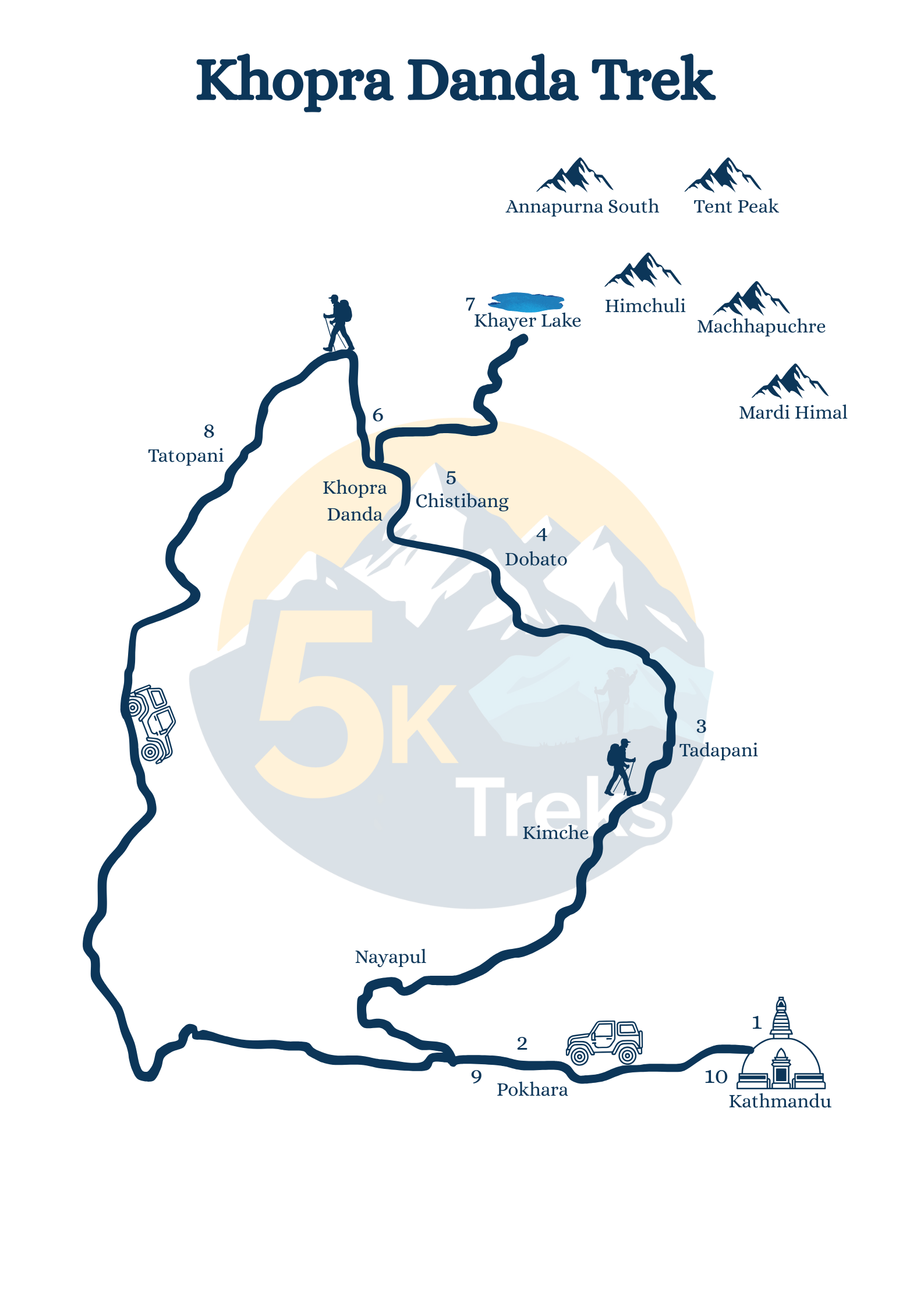
Arrival in Kathmandu
Kathmandu to Pokhara (Drive)
Pokhara to Kimche (Drive), Then Trek to Tadapani.
Tadapani to Dobato
Dobato, Hike Mulde Viewpoint, Trek to Chistibang.
Chistibang to Khopra Danda
Khayer Lake Excursion from Khopra Danda.
Khopra Danda to Tatopani.
Tatopani to Pokhara (Drive)
Pokhara to Kathmandu (Drive)
Kathmandu Departure.
Altitude and Acclimatization
You ascend from 900 meters above sea level in Pokhara to a high point at Khayer Lake at 4,660 meters. That's significant elevation gain. AMS can strike anyone, regardless of fitness. Symptoms that occur include headache, nausea, dizziness, and sleep disturbance.
The trip is structured around an 11-day ascent. Day 7 to Khayer Lake has the most rigorous altitude exposure, with lots of up-and-down time (mostly down), but it's only one day. Not sleeping at 4,660 meters. You descend to 3,640 meters, where you sleep after the day trip. It's this descent that helps your body to repair itself.
Hydration is your biggest defence. Consume four to five litres per day. Your urine is almost transparent. If you experience symptoms or they get worse, inform your guide immediately. "When you're actually feeling the altitude, going down is always better."
Physical Condition: You've Got to Work for It
The walk requires 5 to 8 hrs of walking per day, with uphill and downhill trekking. Your body needs to be in shape. If you are not already able to hike with regular elevation gain for four to five hours, start training now.
It's at least two solid months of regular workout activity. Incorporate hill walking with a loaded backpack, or stair climbing and incline walking. Build up to a level where you can comfortably handle three- to four-hour hikes with elevation gain. If you're able to do that, this trek is possible.
Weather Reality: Expect Change
In February through May, the skies are clear and rhododendrons blossom. Days are warm. Nights are cold. Day-to-night temperature inversions of 20 degrees Celsius are not uncommon.
From September to December, the weather is mostly clear. Days are pleasant. The nights are freezing further up.
Avoid the monsoon (June to August) because the rain really doesn't stop, and both landslides and leeches are a thing. The weather changes fast. Clear mornings become cloudy afternoons. Always carry rain protection.
Teahouse Reality: Set Expectations Correctly
The teahouses are basic. The rooms are basic, the beds small, and the nights cold. Bathrooms are basic. The water is cold unless you pay to have it heated. There is no Wi Fi in most places.
Food is authentic. Expect dal bhat daily. And momos, thukpa (a noodle soup), eggs, if possible, yak meat. Western options are minimal. Embrace local food. It tastes better up high, and hospitality is more critical than menu variety.
Teahouse owners are welcoming. Hot water bottles, on your bed at night. Hot tea in the morning. Simplifying our meals without sacrificing effort.
Permits and Documentation
You will need an Annapurna Conservation Area Permit and a TIMS card (Trekkers' Information Management System). These are checked at teahouses. Permits are included if you're trekking with an agency. Carry them always.
Solo Female Trekking: It's Actually Safe
Solo female treks in Nepal are perfectly safe. Thousands of women travel these routes every year. Your guide looks out for you. Teahouse communities are welcoming. Trust your gut, as ever — but fear is not a reason to avoid this trek.
Khopra Danda is the trek fewer people have heard of, but those who have rate it among their best mountain experiences. You ascend from tropical foothills to alpine terrain. You trek to a sacred lake at an extreme altitude, where prayer flags wave, and shrines mark holy ground. You walk along ridges with sweeping views of big mountains that most trekkers never see. This is why many describe the
Your legs will ache. Your lungs will adapt. Your mind will expand. Your viewpoint will be shaped by having worked in real mountains. And when you return to civilization, something of you stays
+
+
+
+
+
+
$1050.00
© 2026 5k Treks Pvt. Ltd. All rights reserved.