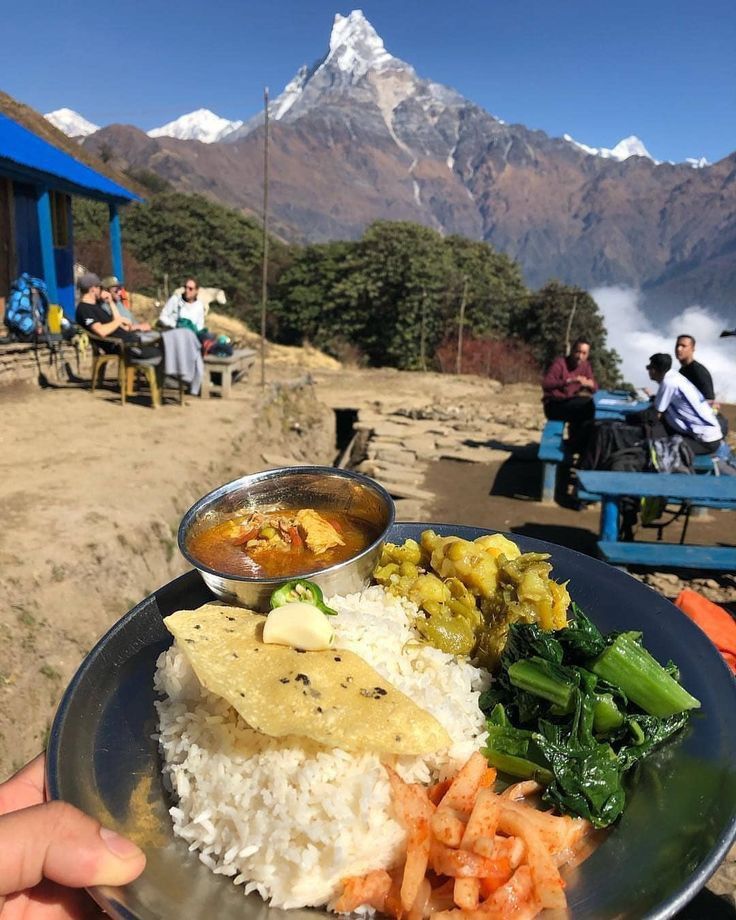
If you're preparing to trek to Annapurna Base Camp, you've probably spent hours researching gear, permits, and itineraries. Yet food, which greatly impacts whether your trek is comfortable or grueling, often isn't considered until you're actually on the trail, staring at the laminated teahouse menu at 3,500 metres. What we really mean to say here is that trekking through the Annapurna region is probably one of the best experiences in Nepal for tea house dining. Be it steaming plates of dal bhat in Chhomrong, ginger tea at sunrise, or apple pie after a long day of walking, food on this trek ranges from the abundant and nourishing to the distinctly satisfying. This guide will tell you precisely what to expect, what to eat, the approximate costs, and what to carry with you from Pokhara.
Why Food Matters on the Annapurna Base Camp Trek
To maintain a healthy caloric intake while hiking 5 to 7 hours per day on steep, uneven terrain, at ever-increasing elevations, proper hydration and an unstressed gut are crucial. If you are at sea level, you may be exhausted after a long day of hiking, but while at elevations above 3,500 to 4,130 metres, poor eating will cause fatigue, mountain sickness, nausea, and could lead to very serious or extreme cases of Acute Mountain Sickness. The higher an individual is above sea level, the more calories they use during exercise than at sea level. Cold weather compounds this effect since an individual's body has to put forth even more effort to keep warm as the temperature drops. Therefore, getting your food and hydration strategy correct is both enjoyable and a safety consideration.
Understanding the Teahouse Food System
The teahouse system is used throughout the Annapurna Base Camp trek. Instead of camping in the wilderness, trekkers will sleep and dine at small family-operated mountain lodges at essential waypoints on the route. Each teahouse serves food from its own kitchen and usually has a menu from which to choose.
While prices within a single village's teahouses are usually comparable, prices tend to vary significantly with elevation. Above Chhomrong, there are no roads to higher elevations, and all food items must be brought to those higher villages by either porters or mules. For example, 1 kg of rice sold in Pokhara for NPR 80 may be sold for NPR 200 or more when you are at Annapurna Base Camp, and those higher prices are reflected in the cost of your meal.
The Annapurna Conservation Area Project (ACAP) is the organization that regulates and oversees the teahouses in the Annapurna region. The ACAP has developed and monitors the hygienic and sanitary standards of the teahouses in the region to provide a consistently acceptable level of sanitation and sanitation safety. Meals are prepared fresh to order, kitchens are generally clean, and the owners of most teahouses are highly motivated to provide quality food and other services to international trekkers.
You have the opportunity to have breakfast between 6:30 AM and 7:30 AM to get an early start on your day, placing you in cooler temperatures throughout your walk. Lunch will be provided along the route in one of the tea houses, and it typically lasts between 30 and 45 minutes. Dinner will be the most leisurely meal of the day; it usually takes place either late in the evening or sometime later in the afternoon, on a stove in a common dining area.
What's on the Teahouse Menu: A Full Breakdown
The menus of teahouses along the Annapurna Base Camp trek offer a fusion of traditional Nepalese food, Tibetan cuisine, and simplified Western cuisine. Teahouse menus will vary depending on elevation – in the lower elevation regions of Ghandruk, Jhinu Danda, and Chhomrong, you can expect fairly extensive menus and will continue to narrow down as you continue to climb in elevation. Here is an overview of what you can expect at each meal.
Breakfast
A good breakfast is essential before a long trekking day. The most popular options include porridge (oat or rice, served with honey, milk, and dried fruit), Tibetan bread (a dense pan-fried flatbread with jam, honey, or peanut butter), eggs in every form (boiled, fried, scrambled, or omelette with cheese or vegetables), pancakes (plain, banana, or apple, available up to mid-altitude), muesli with milk and fruit, toast with jam or peanut butter, chapati with vegetable curry, and fried spiced potatoes.
Lunch
Lunch is eaten en route at a mid-day teahouse stop. Most trekkers choose something quick to prepare, light but calorific, and easy to digest. Common choices include dal bhat, vegetable fried rice, vegetable chow mein, momos (steamed or fried dumplings, available below Chhomrong), noodle or thukpa soup, pasta with tomato sauce, pizza at lower teahouses, sandwiches with cheese or egg, and French fries.
Dinner
Dinner is the social heart of the teahouse experience. After arriving at your lodge in the afternoon, trekkers gather in the communal dining room for warm food and conversation. Options largely mirror lunch, with some additions: dal bhat remains the best choice, thukpa (Tibetan noodle soup) is excellent on cold nights, garlic soup is strongly recommended by guides from Deurali upward, vegetable curry with rice or chapati is warming and genuinely Nepali, and apple pie and simple desserts are available at lower teahouses like Ghandruk and Chhomrong.
Snacks and Hot Drinks
Hot drinks are available at every teahouse and are worth budgeting for separately. Ginger tea, lemon tea, black tea, and milk tea are the essential trail drinks — warming, digestive, and hydrating. Instant or basic brewed coffee is available at lower altitudes. Packaged chocolate bars, biscuits, and chips are available at the teahouse snack shelves, though prices rise steeply with altitude. Energy bars are available but limited — stock up in Pokhara.
One important warning: most guides strongly recommend avoiding alcohol above 3,000 metres. Alcohol dehydrates the body, disrupts sleep quality at altitude, and significantly worsens the symptoms and risk of Acute Mountain Sickness (AMS), which may become dangerous if ignored. If you drink, do so only at lower elevations and always sparingly. If you feel unwell, prioritize rehydration and report symptoms to guides immediately.
Dal Bhat: The King of Trek Food
The slogan of "Dal Bhat Power, 24 Hours" isn’t just a word of mouth among trekkers–it’s the nutritional basis for the majority of food served on the Annapurna Base Camp Trekker. A standard plate of the national dish of Nepal, dal bhat, consists of a serving of basmati rice (bhatt), a serving of dal (lentils) or rice, a serving of seasonal vegetable curry tarkari, a serving of pickle vegetables or chutney achaar, and often, a serving of flatbread or crisps (not always available on the Annapurna Trail).
The key to the unlimited nature of the dal bhat meal on the Annapurna Trail is that most lodges along the route have a policy of giving you unlimited refills on your dal bhat, meaning that when your plate becomes empty, the kitchen will bring you another pot of rice, another pot of dal, and another pot of vegetable curry at no extra cost. This means that if you are a hungry trekker who has walked for 6 hours straight and is now at the top of a mountain, do not eat anything else for at least the next week, as dal bhat is the highest-value meal you will receive during the entire trek–both nutritionally and financially. The rice in dal bhat will provide you with an extended source of energy (starch) for 5 -7 hours.
Furthermore, dal bhat contains no fat or cholesterol, which makes it very digestible for individuals who are trekking at altitude and may have slower digestion than at sea level. During times of year when the temperature is cooler, or at points along the trekking route where the weather is unpredictable, the hot food served at the lodges of Nepal will help to keep your body warm while trekking. Thus, dal bhat is the most common, digestible, and familiar meal that a person can eat during treks in Nepal, compared with other types of foods typically consumed in Western Countries (e.g., steak).
Food by Altitude: What Changes as You Climb
The higher you go on the Annapurna Base Camp Trek, the simpler the menu and the higher the price. Here is what to expect at each key stop.
- Pokhara, Nayapul, and Birethanti (820m–1,070m): Full restaurant menus with fresh meat, brewed coffee, baked goods, cold drinks, and everything you could want. Very affordable. This is where you stock up on snacks before the trek begins.
- Ghandruk and Landruk (1,940m): Extensive teahouse menus — dal bhat, momos, pizza, pasta, eggs, apple pie, fresh vegetables, and meat dishes. This is the best variety you will find on the lower trail.
- Jhinu Danda and Chhomrong (1,780m–2,170m): Wide menus still available. This is the last reliable point for meat dishes and fresh vegetables. Above here, carrying meat is prohibited inside the ACAP zone. Desserts like apple pie are still available. Prices begin to rise.
- Sinuwa, Bamboo, and Dovan (2,340m–2,520m): Menus become vegetarian only. Dal bhat, fried rice, chow mein, soups, eggs, and porridge dominate. Prices are noticeably higher than in the lower sections.
- Himalaya and Deurali (2,900m–3,200m): Simpler menus. Dal bhat, noodle soup, thukpa, fried rice, and eggs are the staples. Appetite may begin to decrease. Prioritise carbohydrate-rich, easily digestible meals. Hot ginger and lemon tea is available at all hours.
- Machhapuchhre Base Camp (3,700m): Basic menus only — dal bhat, noodles, soup, and rice. No complex Western dishes. Garlic soup is strongly recommended by guides. Some trekkers experience loss of appetite here. Eat anyway, even in small amounts.
- Annapurna Base Camp (4,130m): The most limited and most expensive menus on the route. Dal bhat (NPR 800 and above), noodles, basic soups, and hot drinks only. No fresh vegetables, no meat. Everything is carbohydrate-focused. Warm ginger tea is essential. Eat even if your appetite is very low.
Food Costs and Prices on the Annapurna Base Camp Trek (2026)
Food costs rise consistently with altitude because every ingredient above Chhomrong must be porter-carried or mule-carried uphill with no road access. Here are approximate prices at key stages:
- Dal bhat: NPR 400–500 at lower altitudes, NPR 550–650 at mid-altitude, NPR 750–900 at ABC.
- Fried rice or noodles: NPR 300–400 at lower altitudes, NPR 450–550 at mid-altitude, NPR 600–750 at ABC.
- Noodle soup or thukpa: NPR 250–350 at lower altitudes, NPR 400–500 at mid-altitude, NPR 600–700 at ABC.
- Porridge or eggs: NPR 200–350 at lower altitudes, NPR 300–450 at mid-altitude, NPR 500–650 at ABC.
- Garlic soup: NPR 300–400 at lower altitudes, NPR 400–500 at mid-altitude, NPR 500–700 at ABC.
- Ginger or lemon tea: NPR 80–120 at lower altitudes, NPR 120–180 at mid-altitude, NPR 200–300 at ABC.
- Boiled water (1 litre): NPR 60–100 at lower altitudes, NPR 100–180 at mid-altitude, NPR 200–300 at ABC.
- Chocolate bar: NPR 60–80 in Pokhara, NPR 150–200 at mid-altitude, NPR 350–450 at ABC.
Most independent trekkers budget USD $20–$35 per day for all meals and drinks. Hot drinks and snacks add up quickly — budget for these separately. Trekkers on guided packages typically have main meals included, but still spend USD $5–$10 daily on extra drinks and trail snacks.
Pro tip: Stock up on energy bars, chocolate, nuts, and trail snacks in Pokhara's Lakeside area before the trek starts. A Snickers bar that costs NPR 60 in Pokhara costs NPR 350–450 at Annapurna Base Camp. Packing 7–10 days of supplementary snacks from Pokhara saves significant money and guarantees you always have fuel between meals.
Water Safety on the Annapurna Base Camp Trek
Water safety is one of the most important health issues along your entire trek. No matter how clear it may seem, do not drink untreated tap, river, or stream water. There is a significant risk of waterborne bacteria and parasites.
The best ways to obtain safe drinking water along your trek are either boiled water from teahouses (available for NPR 100–300 per litre depending on the altitude) or filtered water from the ACAP-run clean drinking water stations, which can be found at several locations along the trail; use water purification tablets (iodine or chlorine tablets will treat 1 litre of water in about 30 minutes and are inexpensive and lightweight) or use a portable UV water purification device (such as a SteriPen or LifeStraw).
When trekking above Chhomrong (2,170 m), single-use plastic water bottles are prohibited in all areas of the Annapurna Conservation Area. Trekkers must bring their own reusable containers and use either boiled water, water purification tablets, or filtration devices at all points in the upper portion of the trekking area. This is an environmental protection issue — please respect it!
At higher altitudes, keeping properly hydrated is vital to preventing altitude sickness and enhancing your physical performance. Aim to drink between three and four litres of water per day. You may also count ginger tea, lemon tea, and hot water with honey as part of your total fluid intake; they tend to be more palatable than cold water on those chilly mornings in the mountains.
Nutrition and Diet Tips for High-Altitude Trekking
Trekking at altitude changes how your body processes food and energy. These principles will help you eat well and stay healthy throughout the Annapurna Base Camp Trek.
- Prioritise carbohydrates. At altitude, carbohydrates are metabolised more efficiently than fats or proteins in lower-oxygen conditions. Rice, noodles, bread, and potatoes are your best friends on the trail. This is why dal bhat and noodle soups dominate teahouse menus — they are naturally altitude-optimised foods.
- Eat small amounts frequently. Do not skip meals even if your appetite decreases above 3,000 metres. Loss of appetite is one of the earliest signs of altitude sickness. Eating small portions regularly — even just soup, toast, or porridge — keeps blood sugar stable, prevents fatigue, and supports acclimatisation.
- Avoid raw salads above lower altitudes. Raw vegetables at higher-altitude teahouses may not have been washed with clean water. Stick to cooked food above Ghandruk to avoid stomach illness. Cooked vegetables in curries, soups, and stir-fries are safe and retain good nutritional value.
- Try garlic soup. Garlic soup is a traditional Himalayan remedy believed to support altitude acclimatisation. Many experienced trekking guides recommend having a bowl at dinner from Deurali (3,200m) upward. It is warm, flavourful, and widely available on the trail.
- Avoid alcohol and limit caffeine. Both dehydrate the body and worsen the risk of altitude sickness. Avoid alcohol entirely above 3,000 metres. Limit coffee to one cup per day and balance it with extra water. Herbal teas are the ideal alternative throughout the upper sections of the trek.
Vegetarian, Vegan, and Gluten-Free on the Annapurna Base Camp Trek
Vegetarians will find the ABC Trek outstanding. Most of the trail's food, particularly above Chhomrong, is entirely plant-based by default. Dal bhat, noodle soups, fried rice, momos, curries, porridge, eggs, and most desserts are all vegetarian. Meat is only reliably available at lower-altitude teahouses and is prohibited above Sinuwa.
Vegans can manage the trek with some planning. Inform your teahouse host clearly that you eat no animal products, including eggs, butter, honey, and milk. At lower altitudes, teahouses can usually accommodate this. Above Deurali, food becomes simpler and more naturally vegan by default — rice, lentils, and vegetable soups dominate.
Gluten-free trekkers should note that rice, rice noodles, and potato dishes are naturally gluten-free, and dal bhat without bread or papad is also suitable. However, cross-contamination is common in small teahouse kitchens. Always communicate your requirements clearly and bring your own gluten-free snacks from Pokhara or Kathmandu as backup.
For any serious food allergy, communicate clearly with teahouse owners at the start of each meal and ideally learn the relevant phrase in Nepali. Carry emergency medication and never assume a dish is safe without asking.
What Food to Pack from Pokhara
Teahouses provide all main meals, but you should stock up on snacks and supplements in Pokhara before beginning the trek. Here is what experienced trekkers bring:
- Energy snacks: energy bars (Clif, KIND, or local Nepali brands), trail mix with nuts and dried fruit, dark chocolate bars, dried mango and apricots, and peanut butter sachets.
- Supplements and health items: electrolyte sachets or oral rehydration salts, water purification tablets, vitamin C, Diamox (for altitude sickness prevention — consult a doctor before your trek), and probiotics or Imodium for stomach protection.
- Hot drink supplies: herbal tea bags (ginger, peppermint, lemon), instant coffee sachets, hot cocoa packets, a reusable 1-litre water bottle, and a small insulated flask.
- Dietary extras: gluten-free snacks if needed, protein powder sachets, instant oatmeal packets, and crackers or rice cakes for low-appetite days at altitude.
- Budget NPR 2,000–5,000 (roughly USD $15–$38) for 7 to 10 days of supplementary trail snacks purchased in Pokhara's Lakeside area. This is dramatically cheaper than buying the same items at altitude.