2026-05-07
11 min read
Every trekker from Korea has experienced this same issue at some point in their lifetime.
After a full day of hiking into the mountains, with 7 hours of climbing up a hill at an altitude of approximately 4000 meters, your calves are on fire, and the effort you are expending in breathing at that altitudinal level is exhausting and demanding, and you will finally arrive at a teahouse and sit there, exhausted, starved, and looking for something to eat. You will take out a laminated menu that you're now reading through: Dal Bhat, Fried Rice, Pasta, Momos, and Dal Bhat again.
What you truly would want to order as your meal is a hot bowl of Kimchi Jjigae or Bibimbap with a perfectly cooked egg on top, or even just a package of Shin Ramyeon cooked properly.
Unfortunately for you, you will not find either one of those meals listed on the menu at the teahouse, nor would you find any of those listed dishes on any other teahouse menu, ever before until now.
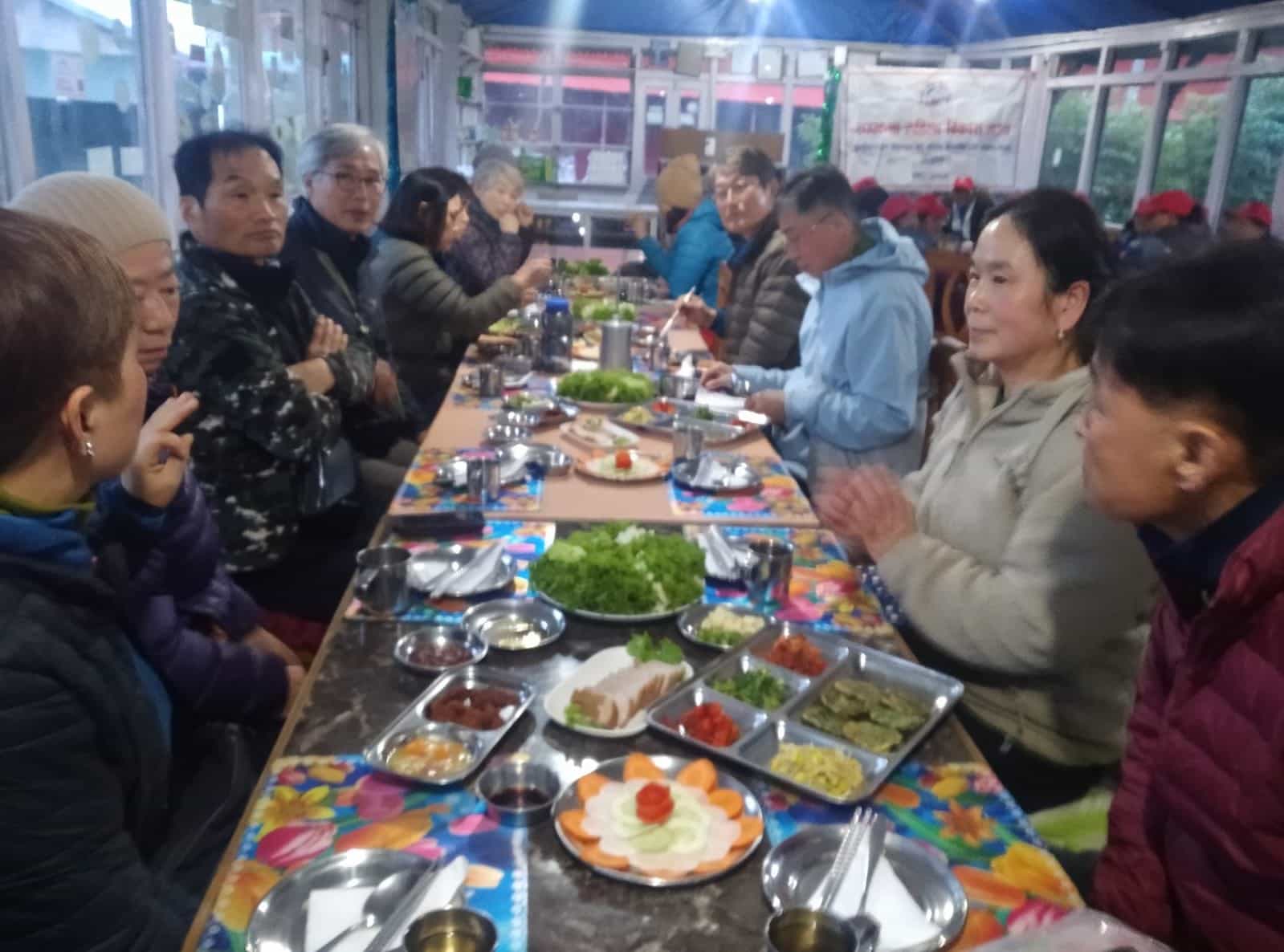
5K Treks (Five K. Treks Pvt. Ltd.) is the only trekking company offering authentic Korean food to all of our trekkers during their trekking trip in Nepal. Instead of assembling and serving you a variety of ramen noodles that have simply been warmed, when you complete your trek each day, you will have the opportunity to eat a freshly cooked, authentic Korean meal that our staff actually prepared and shipped up the mountain before you arrived at the destination of your trek.
To learn more or book a trek with authentic Korean meals, contact us directly or explore our website for trip details. Experience Nepal with food that feels like home.
Nepal ranks among other great trekking locations all around the planet. The terrain is superior to any other in its class. The mountains are unparalleled. One of the erstwhile hidden frustrations experienced by Korean trekkers is related specifically to food options; this will no longer be an unspoken struggle!
Korean cuisine is not available at teahouses. All teahouses will have the same general menu regardless of the specific trek. The menu consists primarily of dal bhat, momos (similar to dumplings), fried rice, pasta, and noodle soup. These dishes are filling, inexpensive, and tasty. However, these dishes do not represent Korean food.
There are very few places on the trail where kimchi can be found, with the only exceptions being on the trek to Everest, where a handful of teahouses are actually starting to carry simple forms of this dish because they cater to the number of Korean hikers that travel this route. However, these teahouses have a limited supply of kimchi that is not prepared with the care that one would give to a home-cooked version.
Most of the necessary Korean ingredients cannot be brought onto the mountain by most tour companies. Ingredients, such as doenjang (fermented soybean paste), gochujang (red pepper paste), sesame oil, dried seaweed, and Korean rice, are not items that regular trekking companies provide on their treks. Due to the special needs and time required to source, package, and prepare Korean food at high altitudes, none of the other trekking companies in Nepal have put the effort into doing so.
Because they did not have access to any other alternative, Korean trekkers, who make up one of the largest populations on the trails in Nepal, have been eating pasta and fried rice for many years.
Before starting your trek, our sourcing team will obtain authentic Korean ingredients from around the city of Kathmandu. We provide all the equipment required to make real Korean food at teahouses during the journey. Below is a list of what we can prepare:
Our kimchi jjigae brings you ultimate comfort at its height. It consists of fermented vegetables, Tofu and Kimchi in a spicy broth. After a long day of trekking through the cold mountains, nothing will refresh you more than this dish. Our kimchi is made in Kathmandu and transported to us in sealed containers. It will continue to ferment naturally at the cooler mountain temperatures. Therefore, it will taste better when you get it than when it was originally made.
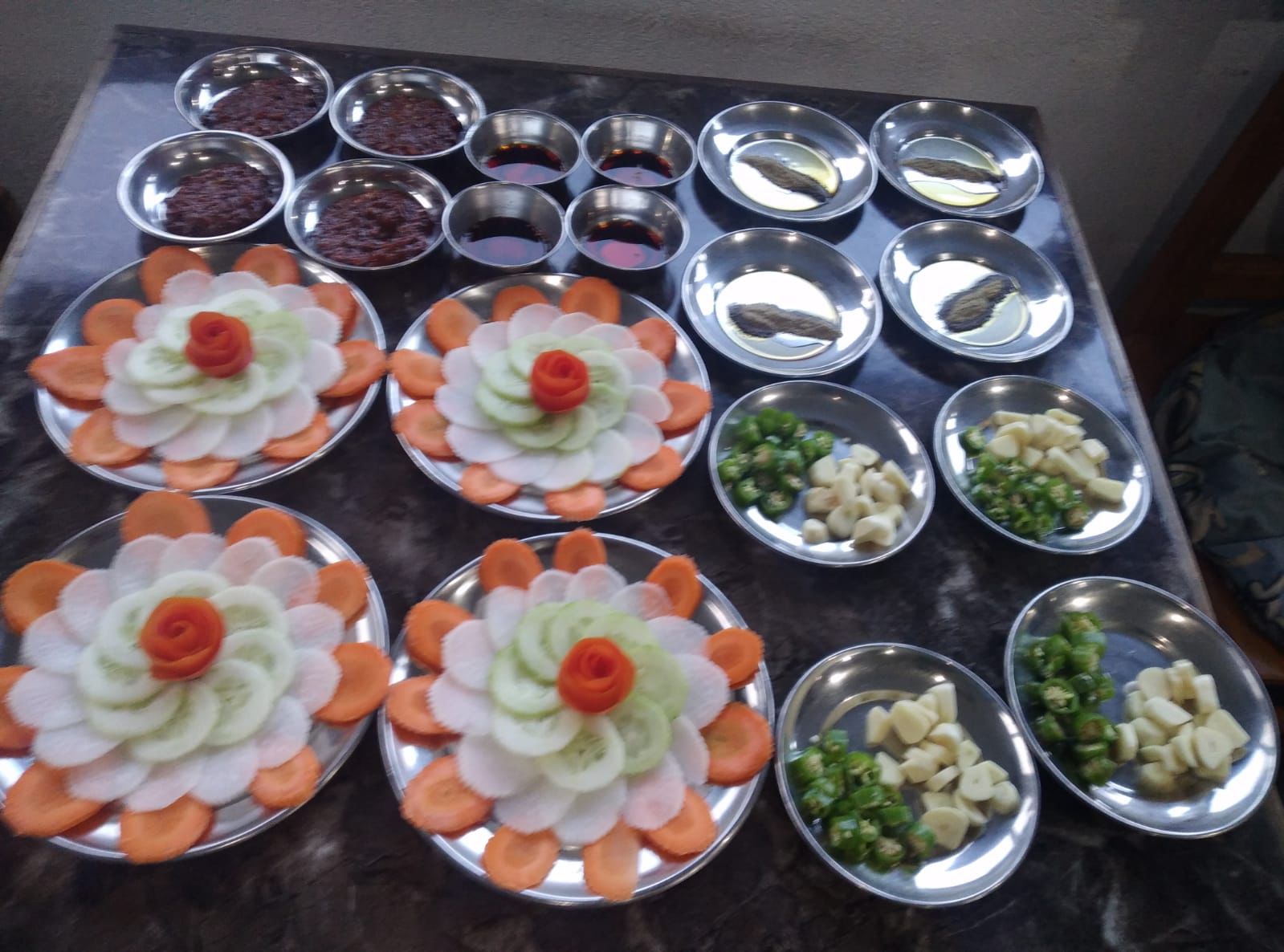
Bibimbap is an easy-to-make Korean meal while hiking due to its components all being prepared separately and then put together once you arrive at the teahouse. Bibimbap is full of nutritional value, balanced food, and very satisfying following a long day of hiking.
A traditional Korean dish, made from fermented soybeans and usually served with tofu and lots of vegetables. Doenjang jjigae is one of the most important foods for anybody doing high-altitude trekking in Korea. Fermented soybean paste is packed full of protein and probiotics, both of which are critical to maintaining digestion/energy while at high elevation. Doenjang jjigae has the perfect warm savoury broth that you need for your altitude-fatigued body.
Sure, here you go! The cup variety is not how we serve it. We don't add cold water to dry noodles. Instead, we cook Shin Ramyeon (and other types) using the proper method: boiling broth and adding an egg and green onion(s). There are major taste differences between authentic Korean ramyeon (what we make) and most of the "ramyeon" that you will find in teahouses, and our staff can tell the difference between them as well!
Gimbap is a type of Korean rice roll made from vegetables, eggs, and seasoned rice all wrapped in dried seaweed. They are perfect for the trail (portable, compact, nutrient-dense, and truly tasty when served cold), so we try to prepare them in the morning so they last for several hours while we are hiking or biking through the mountains.
Japchae consists of stir-fried vegetables over glass noodles, seasoned with soy sauce and sesame oil. At higher altitudes, where heavy meals may be challenging to eat, japchae is a lighter dish and serves well either as a side or main dish. The glass noodles in japchae are digested more easily than other kinds of noodle dishes, while the sesame oil offers lasting energy.
Korean-style rolled omelet is great as a protein-rich, easy breakfast option. Along with rice and soup, a Korean breakfast certainly breaks the monotony of having pancakes and cereal every morning for one week.
We create our banchan selections, such as kongnamul (bean sprout salad), spinach namul, and cucumber muchim, according to how long we will be trekking; the route of the trek and how long we will be there will affect what kinds of banchan we’ll have. Our banchan are in sealed packages ready to eat with the main food items, giving you a real Korean-style table, but at high altitude.
Korean cuisine is much more complicated to prepare in Nepal than the usual teahouse meal, and we want it to be as clear as possible how we go about it.
Sourcing ingredients: the supply of Korean ingredients in Kathmandu is continuing to grow. Before you go to Nepal, we will also have sourced ingredients such as gochujang, sesame oil, doejang, dried seaweed, Korean rice, and all the necessary seasoning from wholesale suppliers in Kathmandu. You can find Korean adaptation to instant noodles (Shin Ramyeon) and other instant products in supermarkets in Kathmandu.
Fermented ingredients: Kimchi and doejang paste are prepared in sealed, air-tight containers. Because of the cold temperature in the mountains during the trek, fermented ingredients (in this case, Kimchi) can continue to be fermented naturally and will not spoil.
Cooking at altitude: The Teahouse kitchens will be used during our overnight stopovers to provide a place for Korean food to be cooked. Our guide will coordinate with the Teahouse team to make certain they will have use of the Teahouse kitchen to prepare the Korean meals. On most of the major trekking routes (Langtang, EBC, & Annapurna), Teahouse kitchens are adequately equipped to accommodate this. Therefore, we have never had any issues while doing this.
Fuel & Equipment: Korean cooking at high elevation utilizes the standard teahouse's gas stove and any cooking utensils you may have; however, we will provide the majority of Korean ingredients, and all the cooking infrastructure necessary for these meals will be supplied by the Teahouse.
We're not able to guarantee all meals will have their menus at elevation and will replace menu items that can't be met by basic facilities above 4500 meters with simple foods such as ramyeon or gimbap; we are honest with clients about what's possible at a certain elevation as well as along specific routes/trails.
Ready to enjoy authentic Korean food on your trek? All our major trekking packages include an option to add Korean meals. Contact us today to customize your trekking experience and savor the taste of Korea in Nepal.
The Langtang region is the best option for Korean food service. The teahouses are well-established, and logistically, the route is relatively straightforward. The 10-day itinerary offers plenty of time to prepare a proper Korean dinner most nights. The Langtang trek is beautiful, and there are Tamang villages and incredible views of the surrounding mountains.
For 14 consecutive days at Everest Base Camp trek, Korean trekkers will be on their longest ever break from traditional Korean food. We can serve Korean-style food at all of the lower elevation stops on this trek; Lukla, Namche Bazaar and while making acclimatisation stops in Namche; and we can use as many Korean-style foods as possible along the majority of the remaining trek after leaving Namche Bazaar and climbing to the summit of everest above Dingboche Up, Each day we do serve a traditional Korean meal with traditional Korean ingredients after we pass Dingboche.
While Annapurna Base Camp has excellent teahouse facilities, it also provides a much easier way to manage the logistics of Korean food compared to any other trekking option. Because of these advantages, we strongly recommend the ABC trek to Korean trekkers who would like to enjoy a full array of Korean cuisine while experiencing some of the best mountain views on earth.
A shorter length (7-9 days), along with the ease of logistics, makes this trek an ideal opportunity for you to enjoy Nepal's trekking scenery while experiencing the cuisine of Korea as well. Bibimbap for breakfast at Poon Hill with a sunrise view is an incredible combination, to say the least!
Korea has an extensive menu of dishes that can be found along the trekking route from the Langtang valley to Yala Peak, which forms part of our Yala Peak climbing package. All our treks are available on request for Trekking & Korean Food - ontact us before booking for more information on what may be available on your trek.
.jpeg)
The trekking culture in Korea is one of the strongest in the world. For Koreans, mountains are not just about fitness; they represent a tradition that has been shared by generations of people in Korea. The respect, discipline, and endurance that Koreans learn while hiking Jirisan or Seoraksan carry over directly to their treks in the Himalayas.
Nepal has observed this trend. The majority of Korean trekkers are consistently among the top five nationalities on major treks in Nepal, which shows the natural and substantial relationship between Korean hiking culture and trails in Nepal.
Food plays an important role in long-distance hiking. Food is motivating. Food gives a sense of morale. Food is used for recovery. After 8 hours of hiking and burning 4000–5000 calories in one day, what you are going to eat at the end of your day is extremely important both physically and psychologically.
For Korean trekkers, eating Korean food is about comfort, and comfort equals performance. Korean trekkers can sleep better, recover faster, and enjoy their treks in the Himalayas more if they are eating kimchi jjigae after a difficult day in the Himalayas, rather than eating pasta for 12 days straight.
5K Treks (Five K. Treks Pvt. Ltd.) is a government-licensed trekking company based in Kathmandu, Nepal. We specialise in personalised trekking experiences across all major Nepal trekking routes, and we are the only operator in Nepal offering a dedicated Korean food service on the trail.
If you are a Korean trekker planning a Nepal expedition and the thought of two weeks without kimchi has been a concern, it no longer needs to be.
Contact us to plan your Korean food trek.
+
+
+
+
+
+
+
+
© 2026 5k Treks Pvt. Ltd. All rights reserved.