

_11zon-thumb.jpg&w=3840&q=50)


Rasuwa
Nepal
14 Days
Challenging
Trekking/ Hiking
3228m
Mar to May, Sep to Nov
Included
Kathmandu/ Kathmandu
Hotels and Teahouses
The
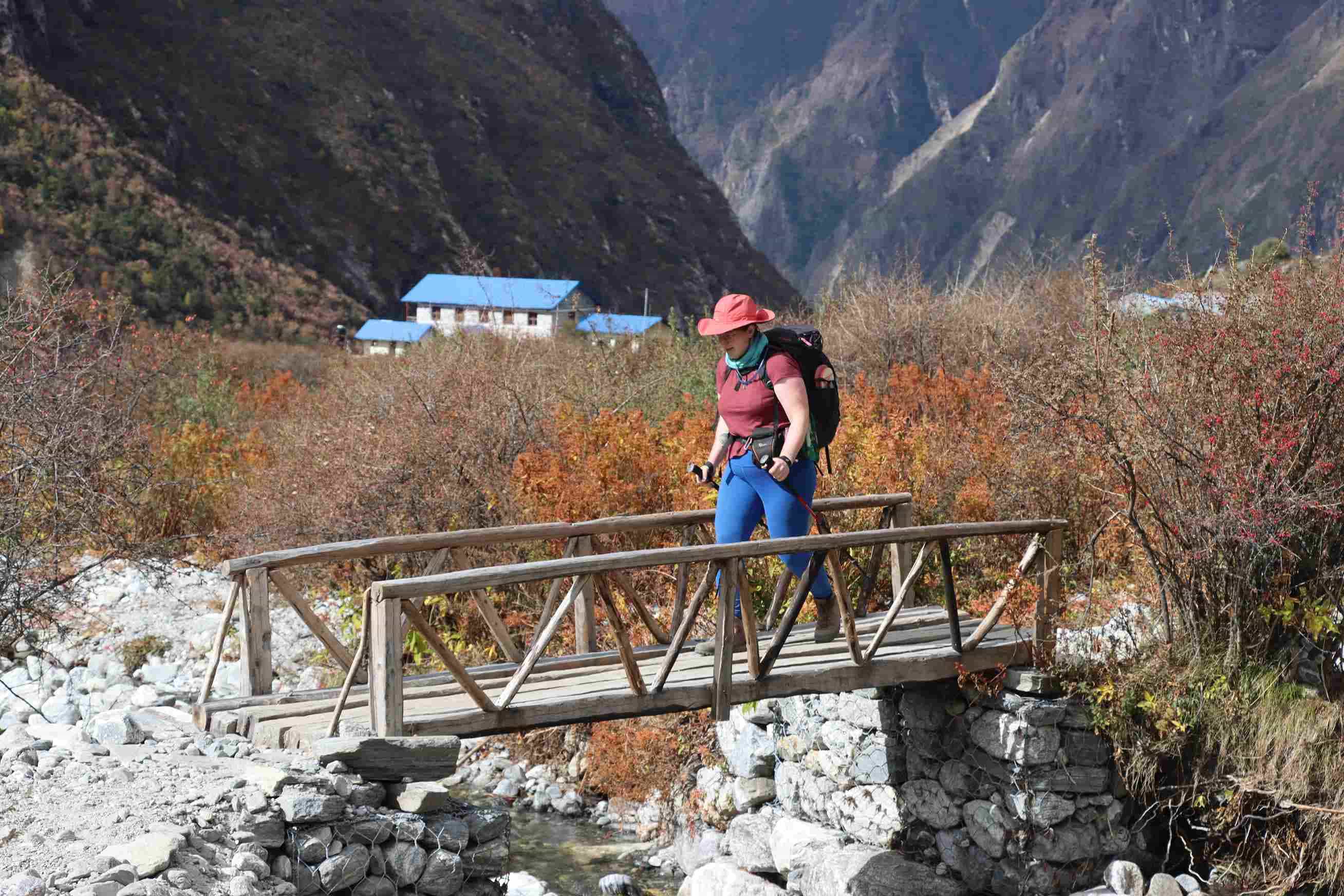
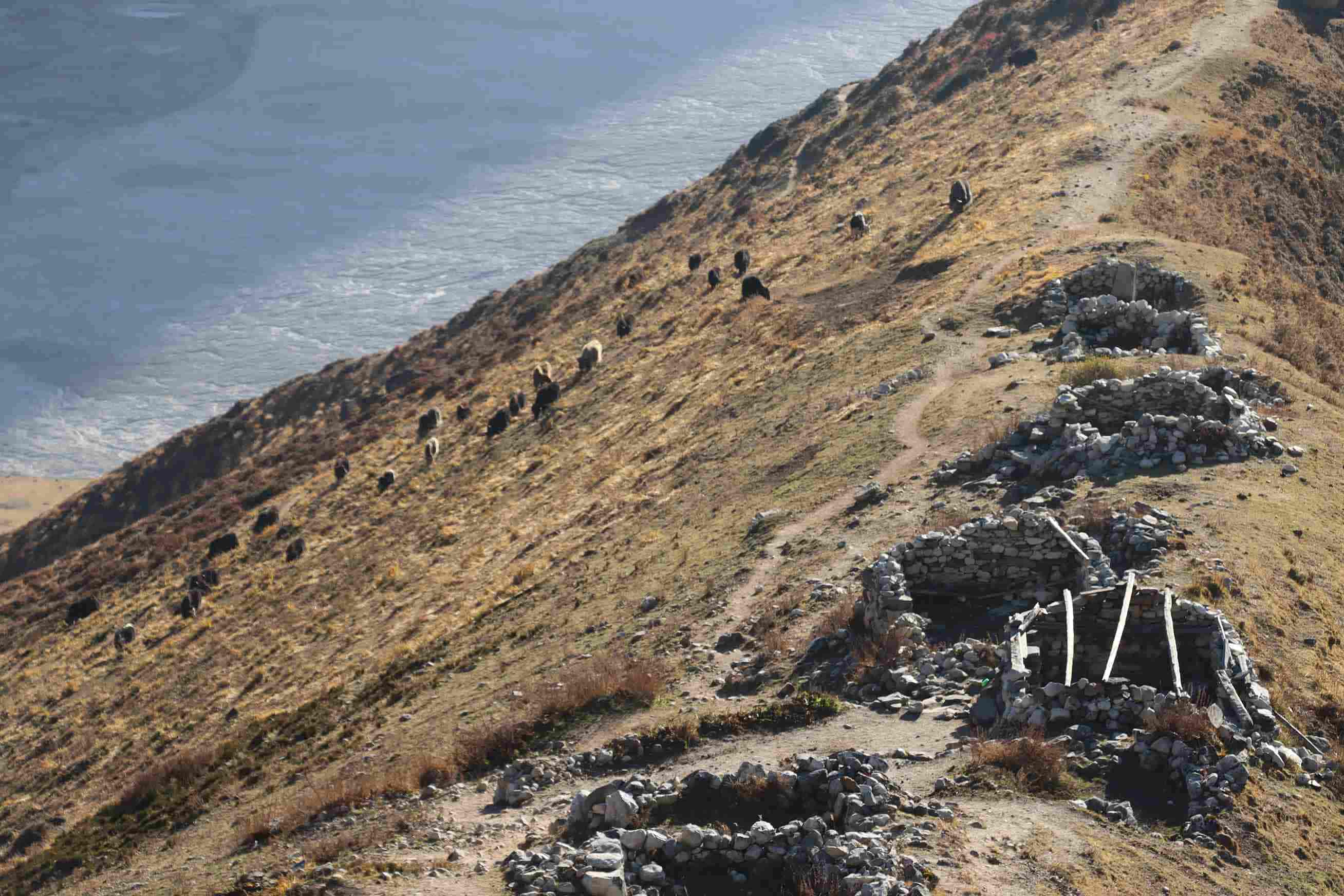
What sets the Tamang Heritage with Langtang Valley trek apart is its excellent combination: you start by hiking through hidden Tamang villages on ridgelines where prayer flags sway in the wind, and the Tamang people's culture remains unchanged and as vibrant as ever. Then you pass through the dramatic Langtang Valley itself and Sherpa villages, flanked by soaring peaks and much-praised alpine meadows for that we-must-have-paid-the-personal-sherpas-a-fortune Himalayan look. This isn't a hike to rush through — it's meant for serious acclimatization, an experience of depth rather than a fast-paced journey to exhaustion.
During these 14 days, you'll learn exactly why both seasoned trekkers and those heading out on their first trek describe this twin combination as the sweet spot of Nepal trekking. You can still claim the bragging rights of attaining altitude without the extreme technical challenge. You get the real Nepal, without the throngs choking the main Everest and Annapurna arteries. And you come back with stories that cause crippling envy among your non-trekking friends.
Here's the hard truth most trekking companies won't admit: The best-known trekking routes in Nepal have been casualties of their own success. The trail to Everest Base Camp is now traversed by thousands of people each day. Parts of the Annapurna Circuit are like crowded hiking parks. But it is refreshingly authentic. There are no dressed-up, tourist-oriented performances by the same local Tamang families. Interaction and information sharing during overnight stays will help visitors learn more about them.
The
How is this combo different from a stand-alone Tamang trek or a stand-alone Langtang trek? The contrast is the magic. You get to visit two different cultures—the freeliving Tamang culture, then the Sherpa-influenced Langtang culture—see how altitude and geography shape mountain life in various ways. The
The level of challenge lies between "actually manageable by fit human beings" and "really pushes you out of your comfort zone." You're not climbing rock walls. You are not hiking solo with the entire 20 pounds of packs. Most days require walking for 4-6 hours and gaining moderate altitude, except the Kyanjin Gompa push (which has an acclimatization day beforehand). This makes the
The trek's affordability supports local homestays and community guides, ensuring your contribution directly benefits the local Tamang and Himalayan communities, making your journey meaningful and sustainable.
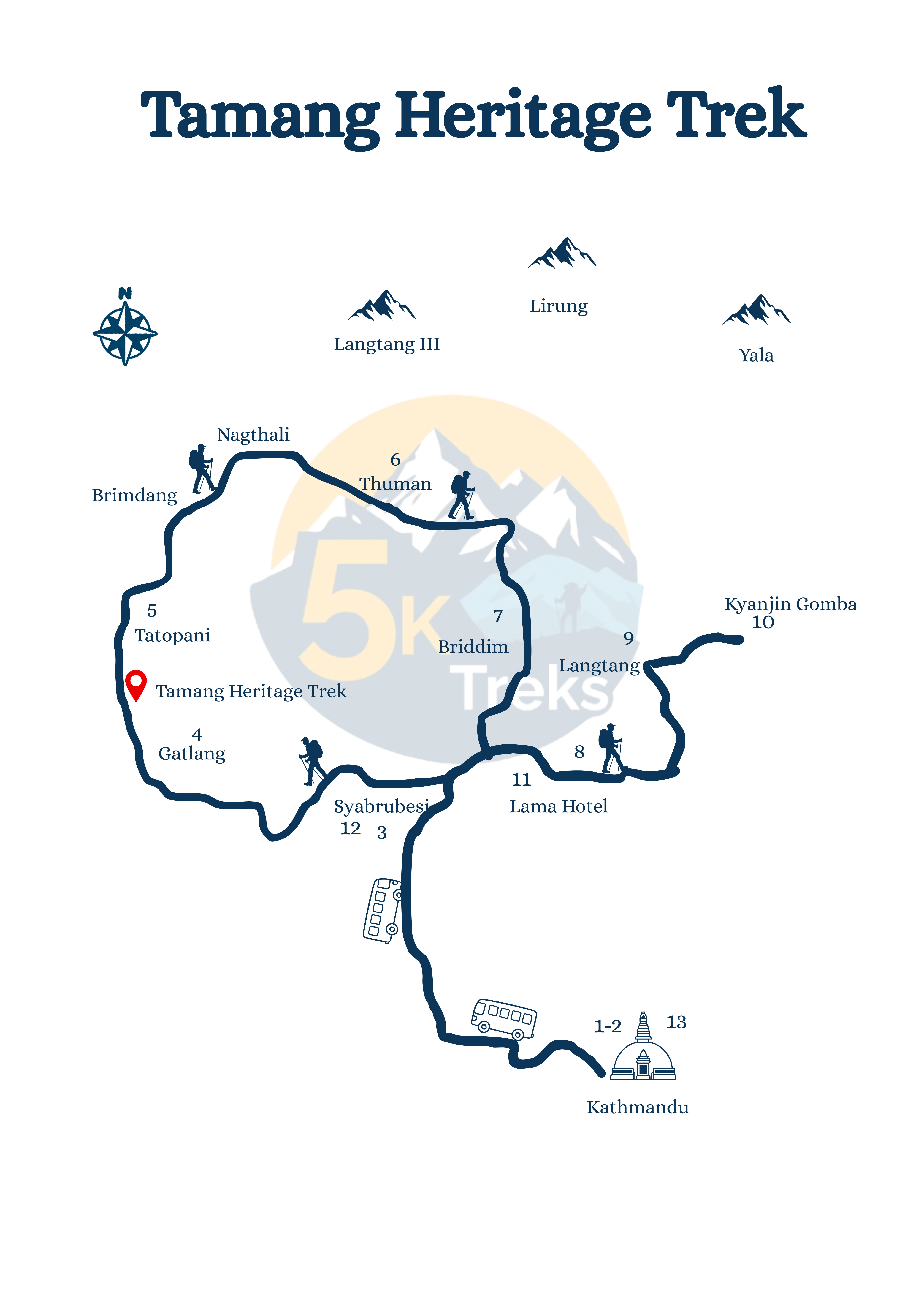
Arrival in Kathmandu
Sightseeing and Trek Preparations in Kathmandu
Drive to Syabrubesi
Syabrubesi to Gatlang
Gatlang to Tatopani
Tatopani – Brimdang – Nagthali – Thuman.
Thuman to Briddim
Briddim to Lama Hotel
Lama Hotel to Langtang Village
Langtang Village to Kyanjin Gompa
Kyanjin Gompa to Lama Hotel.
Lama Hotel to Syabrubesi.
Drive to Kathmandu
Depart Nepal
Let's cut to the chase: You will cover tough ground, but nothing excessive, given your level of fitness. The
Physical preparation matters. Begin training three months out. Walk hills twice weekly. Do stair climbing. Develop cardiovascular endurance for 4-6-hour days at altitude. None of this involves gym memberships — park walks with elevation changes are just fine. By the end of day four, your body has adjusted. By day eight, trekking is second nature. And by day thirteen, you wish the hike wasn't over yet.
The best time to do the
Look forward to some afternoon rain and weekend teahouses at capacity. Spring attracts about 60% of annual trekkers.
September-November: Clear skies and thin crowds mark the autumn months. Temperature 5-15°C. Morning mists clear by mid-morning, revealing distant, crystal-clear mountain views. November (which also happens to be the month we are visiting, as trek season is getting underway) has the ideal weather: cool mornings, clear afternoons, and hardly any rain. Crowds thin after early November. That said, late autumn is probably the best season for the
Do not go in winter (December-February) unless you like extreme cold and possibly snow at over 3000 m. From June to August (Summer), it rains regularly, offering limited views, and the trails can be muddy. It's leech season at its peak then as well — it does not bode well for most travellers.
That's what the
You're getting very high-quality at a great value because the trek is run on a community level rather than a corporate one. TIMS (Trekking Information Management System) permit: About $20. The Langtang National Park permit costs an extra $35. Your anglophone guide will make about $25-30 a day (a fortune in local terms). Porter support costs $15-20 daily. All teahouse and homestay accommodations cost $8-15 a night. Meals average $3-5 daily. Vehicle costs from Kathmandu to Syabrubesi and return are $40.
What makes this
International flights are still your responsibility (expect to pay between $600 and $1,200, depending on your departure point. Travel insurance is essential—budget $50-150. Personal gear (a sleeping bag and trekking boots) is your own or can be rented locally for $10-30. Tips for guide and porter are customary but optional — budget $50-100 total.
Alcohol is not covered (although tea and coffee are served freely). Pre- and post-trek accommodation in Kathmandu from day two is approximately $20-40 per night. If you require additional acclimatization days in Kathmandu, adjust your costs accordingly. As a guide, the total cost commitment (including flights) for a trekker on this adventure is about $2,000-$2,500.
Bring lightweight layers — you will peel off and put on clothes continuously at altitude. Take three pairs of merino wool shirts (they dry fast and don't smell). Take one warm fleece and a waterproof jacket. Pack thermal leggings for chilly nights above 2,500 meters. Trekking pants will dry more quickly than jeans and will be less restrictive while going up steep sections.
Footwear matters enormously. Invest in good trekking boots with ankle support — blisters destroy treks faster than altitude sickness does. Break in boots before any long trek; don't show up in brand-new boots like a rookie. Bring two pairs of thick hiking socks. Bring blister treatments and moleskin. Your feet are your transportation.
Bring water purification tablets or a LifeStraw—tap water in teahouses is usually filtered through basic filtration, but you want to be protected against Giardia. Get a good headlamp (LEDs never die and are lightweight to pack). Bring sunscreen (SPF 40+), sunglasses, and a wide-brimmed hat—the high elevation means intense UV rays. Bring lip balm with SPF.
Train with hill walks twice per week for 3 months before departure. Carry a weight-loaded daypack (10-15 pounds) while hiking up stairs. Do cardio: running, cycling, or rowing are great for developing cardiovascular endurance, which is precisely what you need to build at altitude. Stretch every day—flexibility can help prevent injury on uneven ground. Breathe deeply to acclimate your body to lower oxygen levels.
Carry simple medicines: ibuprofen, an antihistamine, Imodium, and paracetamol. Pack a good, basic first-aid kit — your guide has the basics, but bringing personal supplies is useful. Bring any medications (prescription) in original, labelled bottles. Medications can affect you more strongly at high altitude, so talk with your doctor before finalizing trekking plans.
Pack a small daypack (20-30 litres) for everyday trekking. Your main luggage will remain in Kathmandu from day 13 onwards and will be carried by porters during the trek. Have one outfit for the day of the flight permanently here in KTM. This is the packing strategy that drastically cuts pack weight—porters carry your main bag, and all you need to worry about throughout each day are the essentials.
Sleep the nights before your highest-elevation days heavily. Your body processes oxygen differently at altitude while sleeping—generous rest means better acclimatization. Please don't rush the first three days; treating them as forced rest allows your body's physiology to adapt before real climbing begins.
Engage genuinely with your homestay family. Share photos on your phone. Learn basic Nepali greetings: "Namaste" (hello), "Dhanyabad" (thank you), "Kasto chha?" (How are you?) These minimal efforts transform your experience from tourist to guest. Families appreciate respect profoundly. Tipping at homestay departure—$5-10 for genuine hospitality—creates a meaningful impact in communities where this represents significant income.
Photography spots that move souls: sunrise from Nagthali Pass (bring your alarm), the prayer flag forests between Gatlang and Tatopani, Kyanjin Gompa monastery at dawn, and the Langtang Valley ridge walks where rhododendron forests stretch below. Capture these moments, but remain present—the best memories form when you pause to experience the moment.
Sustainability matters here because these mountains are home, not just scenery. Pack out everything you pack in. Never leave trash. Respect water sources—they're drinking water for downstream communities. Don't touch religious artifacts or monuments. Ask permission before photographing people. These practices preserve the very authenticity that makes this trek special.
Bring small gifts from your home country—pens, notebooks, or quality tea. These simple items delight children in homestays far more than candy (which poses health risks). Sustain friendships by mailing photos or cards after the trek. Several trekking families have hosted the same visitors for decades; genuine connection transcends borders.
The
You've trekked alongside families who have lived in the mountains for centuries. You have slept in homes without electricity, but full of warmth. You've climbed (if not physically then in your freaking head) interior mountains — fears about your physical endurance, assumptions around what luxuries you "need," doubts about hiking at elevation. These wins are more important than the passport stamps.
Start planning now. Contact us, check autumn 2025 availability, and commit to this adventure. Your future self—the one standing on Nagthali Pass watching sunrise paint the Himalayas gold, the one laughing with Sherpa children at Kyanjin Gompa, the one finally understanding why mountains call people back again and again—will thank your present self profoundly.
The mountains are waiting. The trail is ready. Your transformation begins with one booking.
+
+
+
+
+
+
$1350.00
© 2026 5k Treks Pvt. Ltd. All rights reserved.