2026-04-23
13 min read
Trekking in Nepal without insurance is no longer an option; it is now a legal requirement. You should sort your insurance before hitting the trail, as it is a life-saving tool and the most important thing to have in order before setting out. This guide will explain exactly what type of insurance to obtain, how much coverage you need, and why having the right policy could save your life and potentially tens of thousands of dollars.
The Nepalese government has changed the regulations on trekking through national parks and conservation areas. All trekkers must now carry valid travel insurance as a requirement for obtaining a trek permit to enter areas within the Sagarmatha (Everest), Annapurna, and Langtang regions of Nepal.
At the park entry gates and ranger stations, QR codes embedded in digital trekking permits will be scanned and will link to your insurance profile. If your insurance does not provide for helicopter evacuation to your intended altitude, you will not be allowed to trek. No exceptions will be made to this rule.
If you have no insurance, you cannot obtain a permit to trek in Nepal. A new system has been implemented in which insurance verification is now part of the permitting process. Do not just think your credit card or travel insurance will meet the minimum requirement, because many will not.
This is being done to address two long-standing problems: the issue of trekkers being left with no way of being rescued in the event of an emergency, and the fact that false claims are being made for the cost of rescues being very high and an impediment to providing legitimate rescues. The new rule will protect both trekkers and the legitimacy of the rescue operation in Nepal.
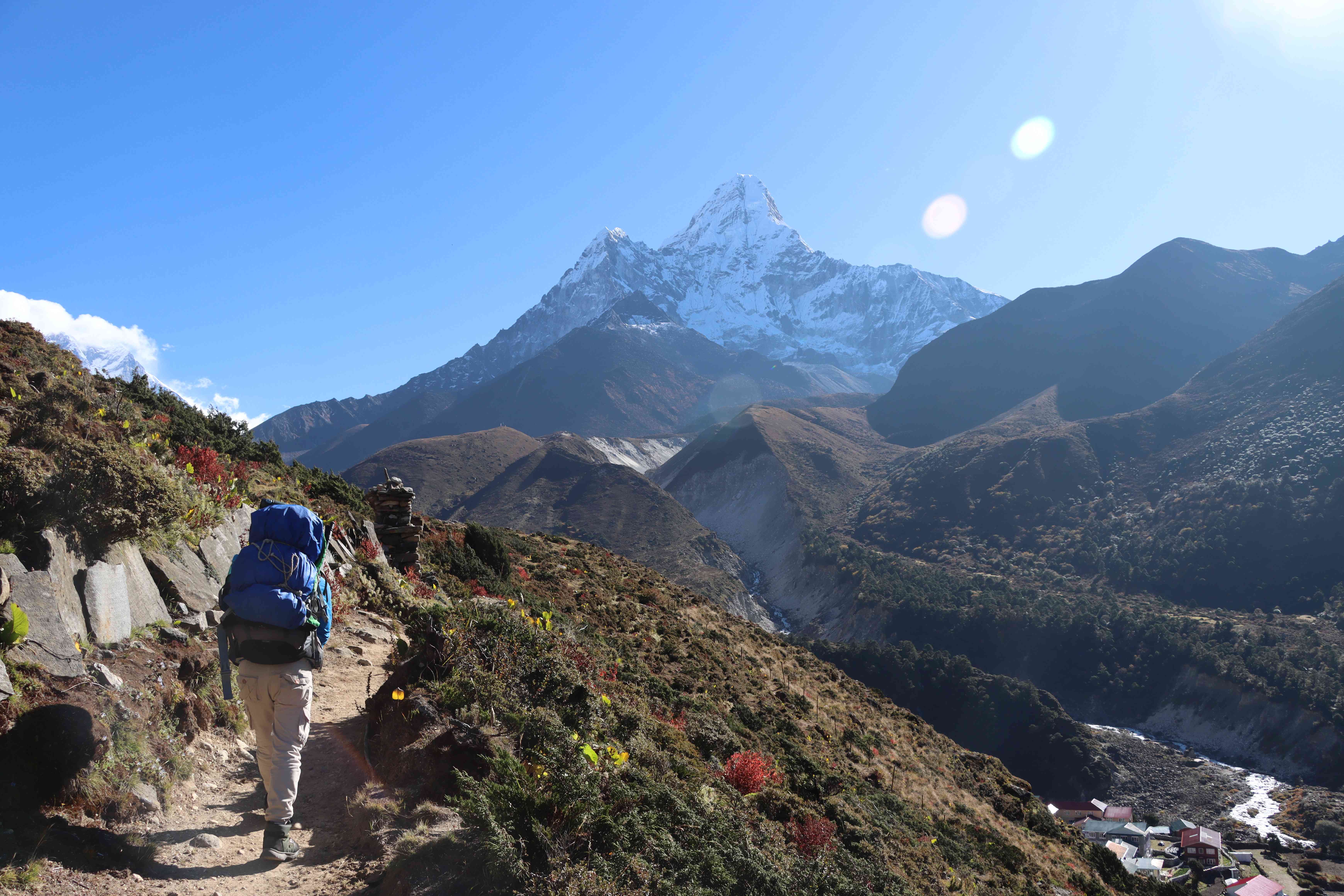
Trekking in the Himalayas is a physically demanding experience fraught with danger due to the harsh climate and unpredictable weather conditions, as well as elevation, remote areas, and rugged trails. Many things may happen; these bad things happen regularly.
Almost half of all trekkers at an altitude of over 3,000m will contract Acute Mountain Sickness at some point during their trip; elevated cases eventually turn into either High Altitude Pulmonary Edema(HAPE) - fluid build-up in the lungs; or High Altitude Cerebral Edema(HACE) - an inflamed brain. These conditions can be both fatal and require either immediate descent from altitude or helicopter access to lower elevations. At altitude, an individual who does not receive helicopter evacuation will not be sufficiently treated unless their condition improves.
The trails to locations such as Everest Base Camp, Manaslu Circuit, and Annapurna Circuit have some very steep, rocky, and frequently icy terrain. It's common for people to fall, twist their ankles, and break their bones. There are no ambulances in the high-altitude regions of the Himalayas. To reach the nearest road from where a stretcher can be taken takes at least a couple of days. An evac helicopter can transport you to a hospital in Kathmandu in less than an hour.
In the winter months, people experience heavy snowfall, blizzard conditions, and avalanche threats. If you are trekking in these conditions, you could be stuck for several days with no way to get back down the mountain due to blocked access routes. You may have to rely on an insurance policy that covers alternative lodging, incidentals, and evacuation issues.
Altitude does not affect medical emergencies such as cardiac events, gastrointestinal disease, and severe infection; however, the availability of hospital care in the trekking regions of Nepal can be limited to almost nonexistent. Therefore, in the case of needing serious medical treatment, the only option may be to evacuate to Kathmandu, where hospitals like CIWEC and Grande offer hospitalization and treatment.
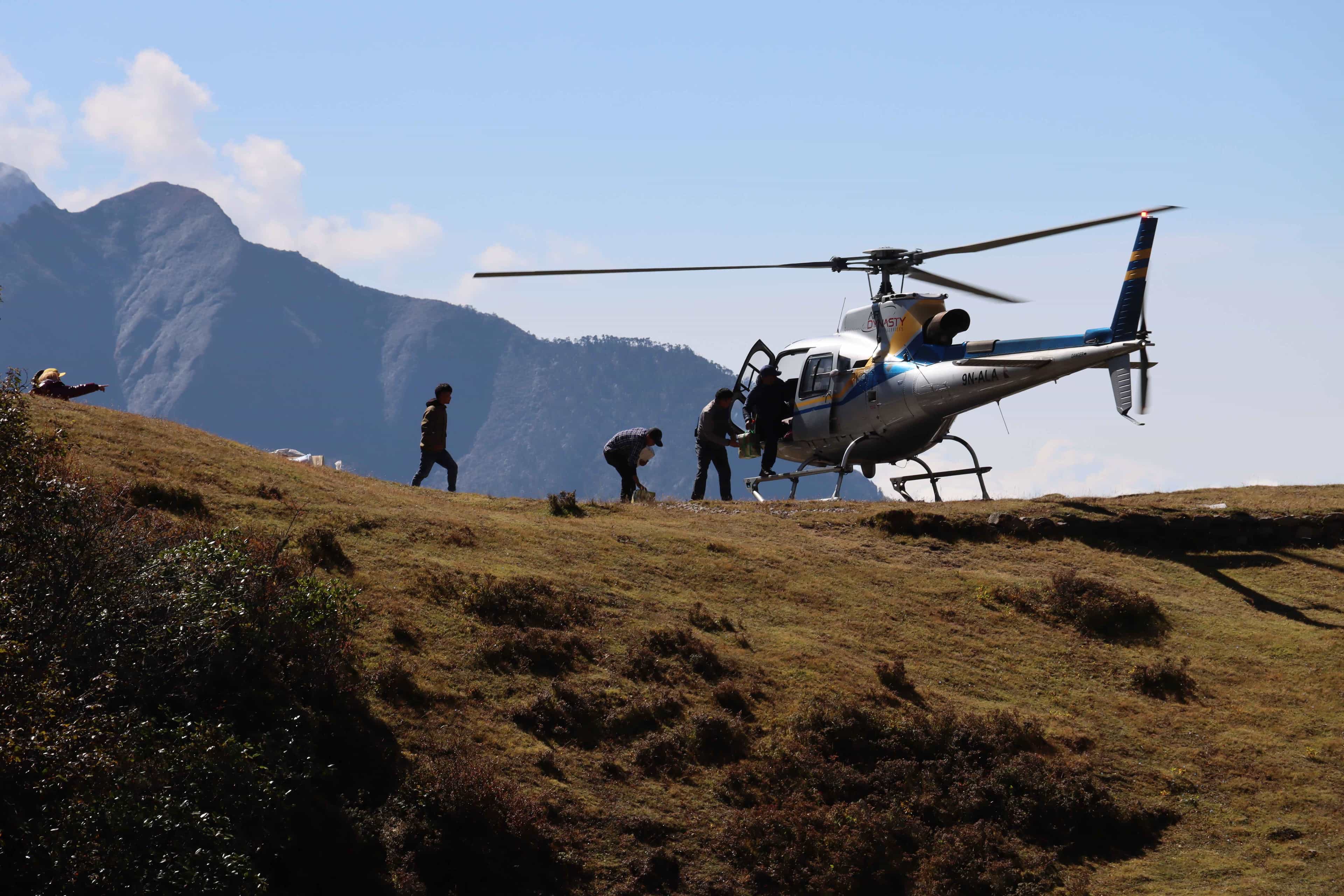
The cost of a helicopter evacuation from the Everest Base Camp region to Kathmandu can vary between $4,000 and $7,000. If you do not have insurance coverage, the costs of being admitted and treated in a hospital and repatriation back home can be between $10,000 and $30,000. Rescue operators will not deploy a helicopter without receiving prior payment approval; therefore, you will have to pay out of your own pocket if you do not have insurance coverage.
Regular travel insurance does not provide coverage while trekking. A regular vacation or backpacker policy almost always excludes coverage for high-altitude trekking, helicopter rescue, and altitude-related medical problems.
When purchasing trekking insurance for Nepal, always check to see if the policy covers all of the items on this list:
Other forms of coverage that should be considered for appropriate trip cancellations and/or interruptions may include: if you need to cancel a trip due to an injury or illness; if you need to be evacuated for medical reasons; if you need to be canceled due to a storm, etc.
This is the number one reason why trekking insurance claims have been denied. The insured trekked at an altitude that exceeded the limits of their insurance policy.
Insurance Policies for trekking in Nepal all include a limit on how high your policy will cover you. If you exceed your altitude limit - even for a few minutes at any time - you could be completely uninsured for anything that happens above your altitude limit.
Altitude coverage by popular trek:
Trek | Maximum Altitude | Minimum Coverage Needed |
Annapurna Base Camp | 4,130m | 5,000m+ |
Langtang Valley Trek | 4,984m | 5,500m |
Everest Base Camp Trek | 5,364m | 5,500m |
Annapurna Circuit | 5,416m | 5,500m |
Manaslu Circuit Trek | 5,106m | 5,500m |
Three Passes Trek (Everest) | 5,535m | 6,000m |
Island Peak Climb | 6,189m | 6,500m+ |
Regardless of your planned altitude (usually 200 – 500 meters above), always purchase a safety net. There can be unpredictable situations that arise, which could push you higher than expected, such as acclimatization hikes, route variations, and/or detours. The cost difference in the premiums between purchasing and obtaining additional coverage compared to a voided claim is minimal.
In the past, the cost of trekking insurance in Nepal has been daunting; most international trekking insurance policies offer sufficient mountain coverage, typically charge between $150 & $400 per trip (plus you will pay even more for the more extensive mountain rescue plans).
Now, however, the Himalayan Guardian Nepal has completely revolutionized this situation by providing local trekking insurance options at about 50% of what you would pay for international trekking insurance options through a government-registered provider.
Himalayan Guardian CTG Plan Pricing
Altitude Cover | Duration | Price |
3,500m | 14 Days | $18/person |
5,500m | 14 Days | $162/person |
6,000m | 14 Days | $221/person |
Note: The above mentioned price is for the age group (18-60) and with a GPS tracker included in the insurance.
When determining the value of a service, compare the dollar cost of that particular service versus what you will receive for it. A perfect example of this is the cost of a CTG Plan. With CTG, you receive a satellite-enabled GPS evacuation device as part of the plan that NO international providers offer, regardless of price. For Everest Base Camp trekkers, the cost of their CTG Insurance Plan is $150, but they could be liable for $5,000 or more for their evacuation if they did not have this plan.
Trekking insurance is offered by international providers such as World Nomads, Allianz, and SafetyWing, allowing you to buy policies while you are outside of your home country. This may be particularly appealing if you want trip cancellation coverage for a scheduled trip before your actual departure from home.
You will want to verify that the altitude limit of the insurance policy meets your needs, as well as make certain that helicopter rescues are clearly covered on the policy as well, by specifically indicating that helicopter evacuations are included and not just emergency evacuations. You will also want to confirm that Nepal is classified as a country where adventure activity is covered by the policy.
In addition, many international insurance policies require you to pay your own expenses related to rescue services and subsequently file for payment from the insurance provider. If you are stranded along a remote section of the Himalayas, this can create real problems for you, both logistically and financially, when you owe thousands to a helicopter operator and are waiting weeks to recover the cost from the insurance company.
Two significant reasons to obtain trekking insurance locally in Nepal (through an authorized trekking agency) are :
1) Lower Price
2) Direct payment.
By utilizing the coordination of an agency's connection to search and rescue service providers & hospitals, no substantial advance monetary payment (cash) is required from the trekkers. The agency takes care of the entire process.
Once you have purchased insurance in Kathmandu, the coverage can begin within 24 hours. Trekking agencies offer you the opportunity to insure yourself at the time of making a reservation, which also encompasses all pre-departure planning.
Buying insurance in Nepal allows for direct billing from search and rescue service providers, as well as from hospitals, therefore negating the need for an out-of-pocket advance in the event of a crisis. You will be required to pay first and claim later, which is a serious problem to cover a helicopter ride out of a remote mountain village, which is greater than $5000.
Himalayan Guardian Nepal was established by Dr. Dhananjay Regmi, previously the CEO of Nepal Tourism Board (the previous CEO of Nepal Tourism Board), with a mission that extends beyond just selling, but to provide a life safety system for every person trekking in the Himalayas.
Their premier product is the Comprehensive Tourism Guard (CTG) — a three-tiered insurance program tailored to the mountainous conditions of Nepal.
How the CTG program differs from any other type of insurance coverage offered for trekking in Nepal:
The objective of the company is much more than just issuing an insurance policy to a customer, but also creating an integrated, holistic approach to prevent, protect, and quickly respond in case of an emergency for every trekker in Nepal, so that no matter where they are from or how much they pay, they all receive the same level of safety and security.
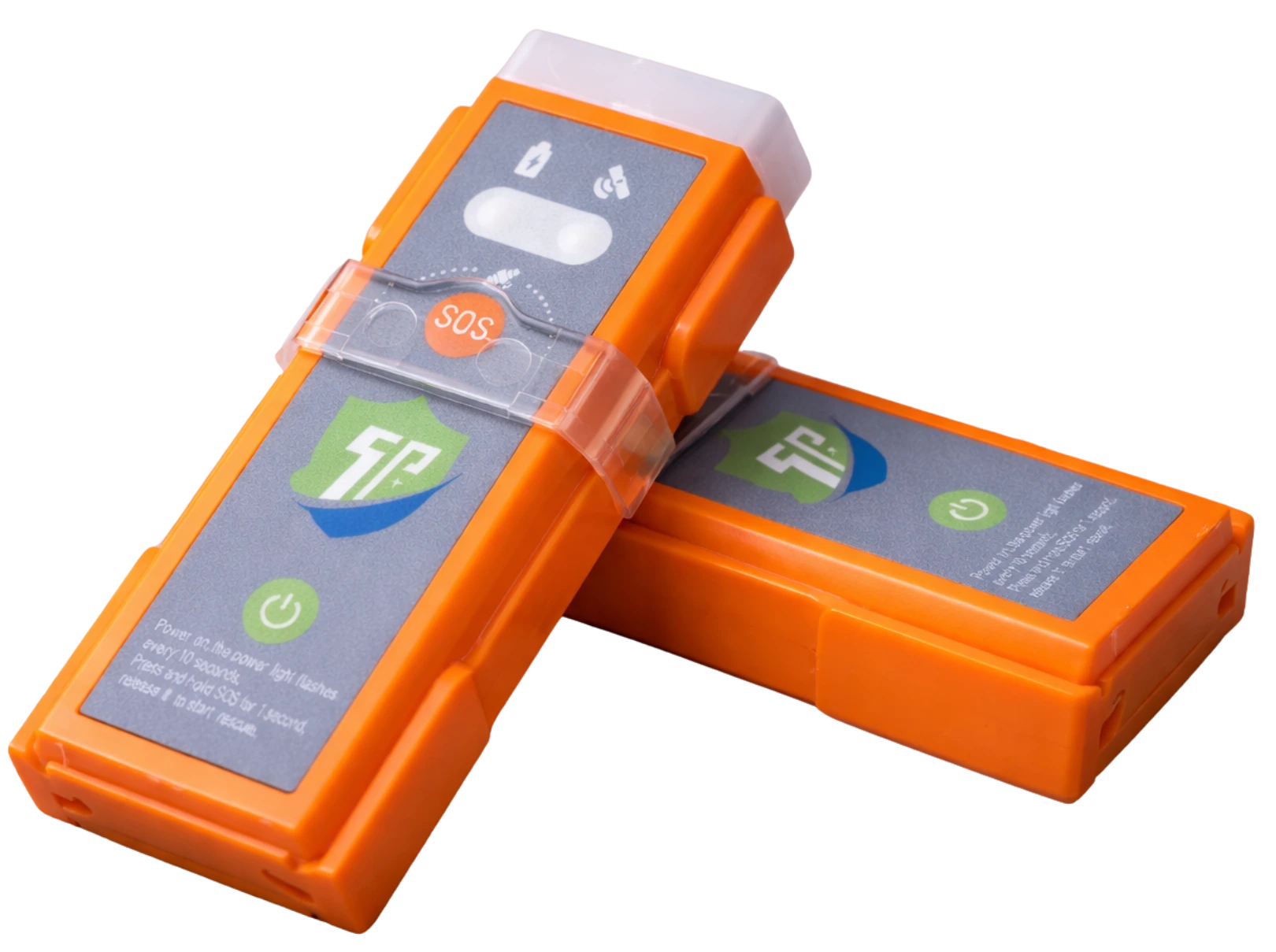
Every trek and climb conducted through Himalayan Guardian utilizes a GPS-enabled satellite communication device that contains a physical SOS button. In Nepal, the SOS button is not just a marketing tool; it is a true lifesaver due to the trails.
When a trekker activates the SOS button, an immediate alert is sent to three parties- the helicopter rescue operator, a medical coordination officer, and the Himalayan Guardian emergency response office. The GPS coordinates are transmitted in real-time, therefore removing the confusion and ambiguity that have resulted in costly delays in the rescue of persons from the mountains.
Historically, mountain rescues in Nepal have had two major systemic issues. First, there are cases of fraudulent insurance claims by guides and/or agencies who have created a false emergency to collect payment from the insurance company for a rescue. This has eroded trust and increased the cost of insurance policies for legitimately insured persons. Secondly, when there is an emergency at a hospital, there are extensive and non-transparent billing processes that create surprise bill amounts for tourists who, at the time of billing, will have little recourse to dispute the amount.
The GPS satellite device solves both problems with the GPS verified SOS, creating an auditable trail; therefore, all legitimate emergencies can be identified. In addition, since the Himalayan Guardian will negotiate the hospital bills directly with the hospital on behalf of the insured trekker, an inflated amount for services provided can be located and disputed before the trekker is provided a bill.
No other Nepal trekking insurance product bundles a satellite rescue device into the base policy. For those trekking in remote areas such as above Namche Bazaar, in remote areas of the Manaslu or Kanchenjunga regions, or on technical high-altitude routes, the satellite rescue device would make the difference between being rescued in hours or days.
Acquiring policy is finishing only half of the task. Most trekkers are subjected to losing their policy's coverage; many times, they find this out at the most unfortunate of times because of entirely preventable mistakes.
Exceeding the altitude limit of your policy is the leading reason for a claim’s denial; always be aware of your altitude ceiling before leaving Kathmandu.
Do not declare a pre-existing medical condition to your insurer; if you do not declare such a pre-existing condition, then no claim will be payable related to the pre-existing condition. Always be honest about any such condition to your insurer and ask for a written waiver.
Purchasing “travel insurance”; however, most travel insurance policies do not allow for high altitude activities; ask specifically for travel insurance that has adventure trekking coverage.
If you plan to arrange for rescue or medical services, you will likely need pre-approval from your insurer. As soon as you are in an emergency, you will have to use the emergency phone number to pre-approve any service you may receive.
Make sure your insurance coverage remains in effect throughout the duration of your trek. If your trip takes longer than you originally expected, you should contact your insurance provider to extend your policy prior to the expiration of your current coverage.
Almost all trekking-related insurance policies contain a provision that voids coverage if you were partaking in alcoholic beverages at the time of the injury.
While trekking, always carry both a hard copy and a digital copy of your insurance policy number and an emergency contact number.
+
+
+
+
© 2026 5k Treks Pvt. Ltd. All rights reserved.